Have your say on the SPOTT 2025 Timber & Pulp Indicator Framework
We would like to invite you to provide feedback to us on the SPOTT Timber and Pulp indicator framework ahead of the 2025 assessments.
Each year we review the indicator framework to ensure it is in line with best practice and provide more detail/clarity on how information is scored. The consultation period starts today and lasts two weeks, please read the framework and provide feedback on indicators.
A copy of the indicator framework in Excel format can be downloaded here. Column H contains the new scoring criteria, with updates to text in blue and deleted text in red. Column J summarises the changes to the framework.
Key proposed change in the 2025 assessment
Proposed changes to scoring criteria are due to the evolution of best practice, alignment with improvements in the SPOTT Natural Rubber and Palm Oil frameworks, and a result of feedback from assessed companies and other stakeholders.
We propose one significant change this year:
- Traceability Practice indicators (#40 and 42), scoring on the disclosure of percentages of traceable supply, will now award one additional point if data is externally verified. For example, a disclosure stating 50% of supply is traceable would score 0.5 points, if that data has been externally verified the score will be 1.5 due to one additional point awarded for external verification. Please see the SPOTT Methodology for the rationale behind awarding additional points and what constitutes external verification.
How to submit your feedback
We appreciate the time it takes to review a framework so if you are limited in capacity filter column J to see all changes, but feedback on all indicators is welcome. Please add any feedback in column P labelled ‘Reviewer comments’ and email your Excel to samuel.ross@zsl.org – the last date for providing feedback on the revised indicators is Monday 24th February.
2025 SPOTT Timber & Pulp Provisional Assessment Timeline
- April-May 2025 – Analysts score company reporting and create a draft SPOTT assessment for each company
- June-July 2025 – Assessed companies are consulted on their draft assessments
- August/September 2025 – The finalised assessments are published on the SPOTT website
If you would like to discuss the indicator framework or assessments in more detail, please get in touch. If you are having issues downloading the framework we can send the Excel file via email.
SPOTT assesses the most impactful producers, processors and traders in the timber and pulp sector on their public disclosure regarding the organisation, policies and practices related to environmental, social and governance (ESG) issues.
Assessed companies are reviewed on an annual basis to ensure that their inclusion continues to align with this aim and with the needs of our users. The review process includes desktop research as well as consultation with our Technical Advisory Groups. Our selection process considers a variety of factors, including:
- The location and extent of the producing and/or processing operations
- Nominations by interested stakeholders
- Companies that have volunteered for assessment
- Evidence of unsustainable practices identified through media reports
- Donor expectations
Change of company names
Three companies will be assessed under different names in 2025:
- PT Adindo Hutani Lestari (previously assessed as Adindo Foresta)
- Maxland Berhad (previously assessed as Priceworth International)
- Sumec International Technology Co.,Ltd (previously assessed as Sumec International Technology Trade)
One company to be removed from SPOTT in 2025
Grupo Cikel (assessed since 2017) will no longer be assessed due to a change in company structure and a significant reduction in forestry operations. All of Grupo Cikel’s previous assessments will remain accessible through the SPOTT website. The removal of Grupo Cikel allows for the inclusion of one new company.
One company to be included on SPOTT in 2025
In line with our company selection process and following our call to stakeholders for company nominations, we have identified Smurfit Westrock as an impactful company to include in the 2025 SPOTT timber and pulp assessments. Smurfit Westrock operates plantations in Brazil and Colombia and sources from various tropical forest landscapes. ZSL has attempted to notify the selected company regarding their forthcoming assessment on SPOTT.
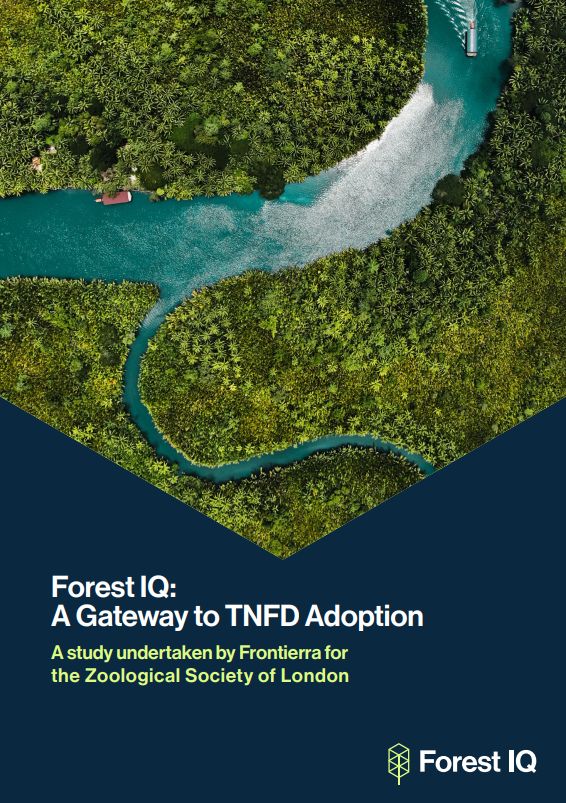
Using Forest IQ data to help financial institutions undertake the Locate, Evaluate, Assess and Prepare (LEAP) approach of the Taskforce on Nature-related Financial Disclosures (TNFD).
As nature-related risks and environmental accountability become critical in today’s financial landscape, Forest IQ offers a unique solution for financial institutions and soft-commodity companies. This comprehensive data platform, developed by the Zoological Society of London (ZSL), Global Canopy and Stockholm Environment Institute (SEI), helps financial institutions enable their transition to deforestation-free financial portfolios.
What you’ll learn in this report
- The strengths and limitations of the Forest IQ platform
- Adoption of the LEAP approach as outlined by TNFD
- How financial institutions are currently using Forest IQ and its associated tools in the context of the TNFD
- How to overcome the limitations of self-reported data using satellite-based assessments for data verification
Case studies and real world examples
Insights from leading financial institutions, including Schroders, Robeco, Federated Hermes, and Storebrand, demonstrating how they apply Forest IQ data to manage deforestation and ecosystem-related risks. By aligning with the LEAP approach outlined by TNFD, these institutions illustrate the practical steps and challenges in identifying and addressing nature-related risks within their portfolios.
Recognising the limitations of self-reported data, the report explores how satellite-based verification can enhance the reliability of deforestation insights. Through case studies of select companies, the report sheds light on the additional layers of assessment needed to verify corporate commitments to zero deforestation.
Who is this report relevant to?
This report is key for financial institutions and soft-commodity companies. Financial institutions can use Forest IQ to align with TNFD’s LEAP framework, strengthening their approach to deforestation risk. Soft-commodity companies gain insights into investor expectations, helping them align practices with sustainable finance standards and regulatory trends.
Forest IQ’s focus beyond deforestation
While the primary focus is on deforestation and ecosystem conversion, Forest IQ provides essential insights into associated human rights risks, offering a gateway for companies to advance on their TNFD journey. With over 2,000 companies assessed, the platform brings together data from SPOTT, Forest 500, and Trase, consolidating crucial metrics in one central location.
For a more in-depth look at how Forest IQ can transform your approach to managing nature-related risks, download the full report.
Decade of analysis reveals need to ramp up efforts as deadline to restore world’s forests approaches
The palm oil sector has made significant advances in commitments to zero deforestation but evidence of implementation is widely lacking, reveals latest assessment from conservation charity ZSL.
Published today (7 November 2024), this year’s ZSL SPOTT palm oil assessment marks a decade of evaluating progress in the industry’s environmental, social, and governance (ESG) public disclosures. While it reveals steady progress in companies adopting zero deforestation commitments, crucial gaps in implementation threaten progress towards the UN COP26 global goal of ending and reversing deforestation by 2030.
The team behind the report is urging the palm oil sector to urgently enhance transparency and accountability – including supply chain industry giants such as Ferrero, Mars and Nestle – in order to reach this vital goal that will help humanity simultaneously address the biodiversity and climate crises.
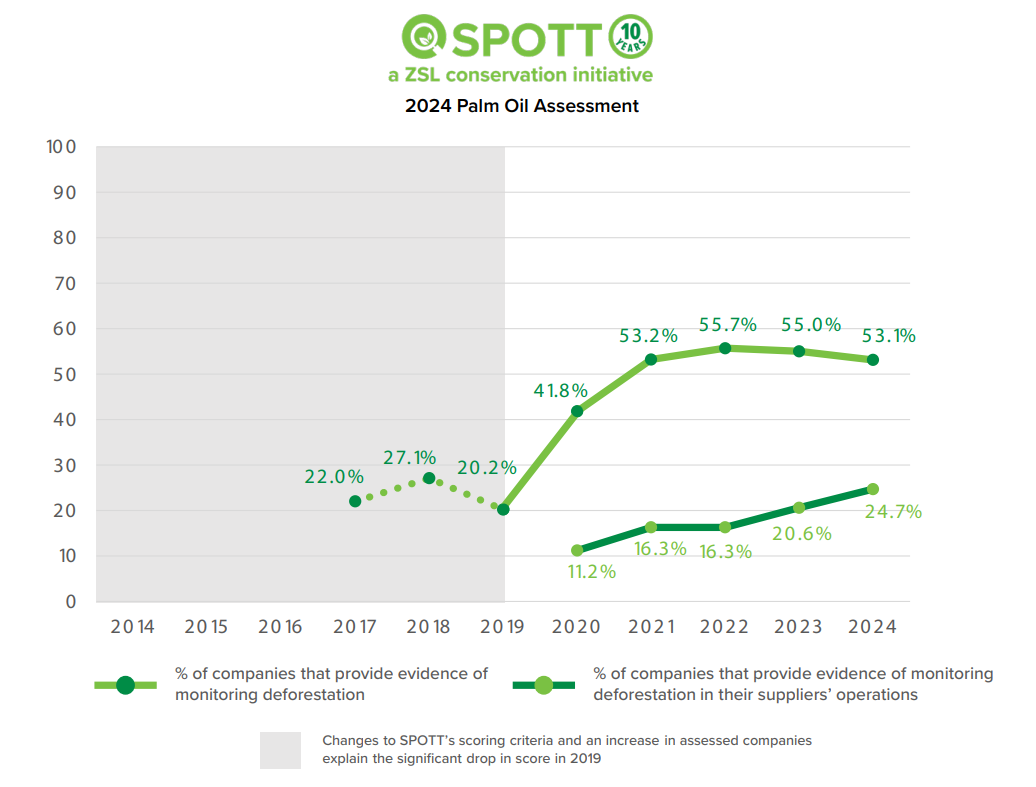
For decades, unsustainable expansion of palm oil plantations have decimated biodiversity in tropical countries, including Indonesia and Malaysia – the world’s largest palm oil producers. Following a greater need for transparency and eliminating deforestation in the industry, SPOTT began to track companies’ deforestation policies and practices in 2014, initially tracking companies’ various approaches to addressing deforestation*. By 2017, SPOTT refined this to focus on clear zero deforestation commitments – at that time, only 29 out of 50 companies had adopted such pledges. Today, 51 out of 81 assessed companies have adopted zero deforestation commitments.

Imogen Fanning, Sustainable Business Project Analyst at ZSL who led the assessment said: “As we work to protect the world’s forests, it’s encouraging that more than half of assessed companies provide evidence of monitoring deforestation in their operations – a 31% increase since this indicator was introduced – however there are still persistent gaps that continue to threaten global goals. Only 24.74% extend this monitoring to their suppliers, highlighting the urgent need for a comprehensive approach that holds all parts of the supply chain accountable and ensures commitments translate into action on the ground.”
ZSL calls for transparent public reporting on how companies are eliminating deforestation, through initiatives like satellite monitoring, field audits and community engagement. Investors and buyers must also share the responsibility by actively engaging with companies, ensuring their commitments are implemented, and aligning with global sustainability standards and regulations, such as RSPO certification and the upcoming EUDR.
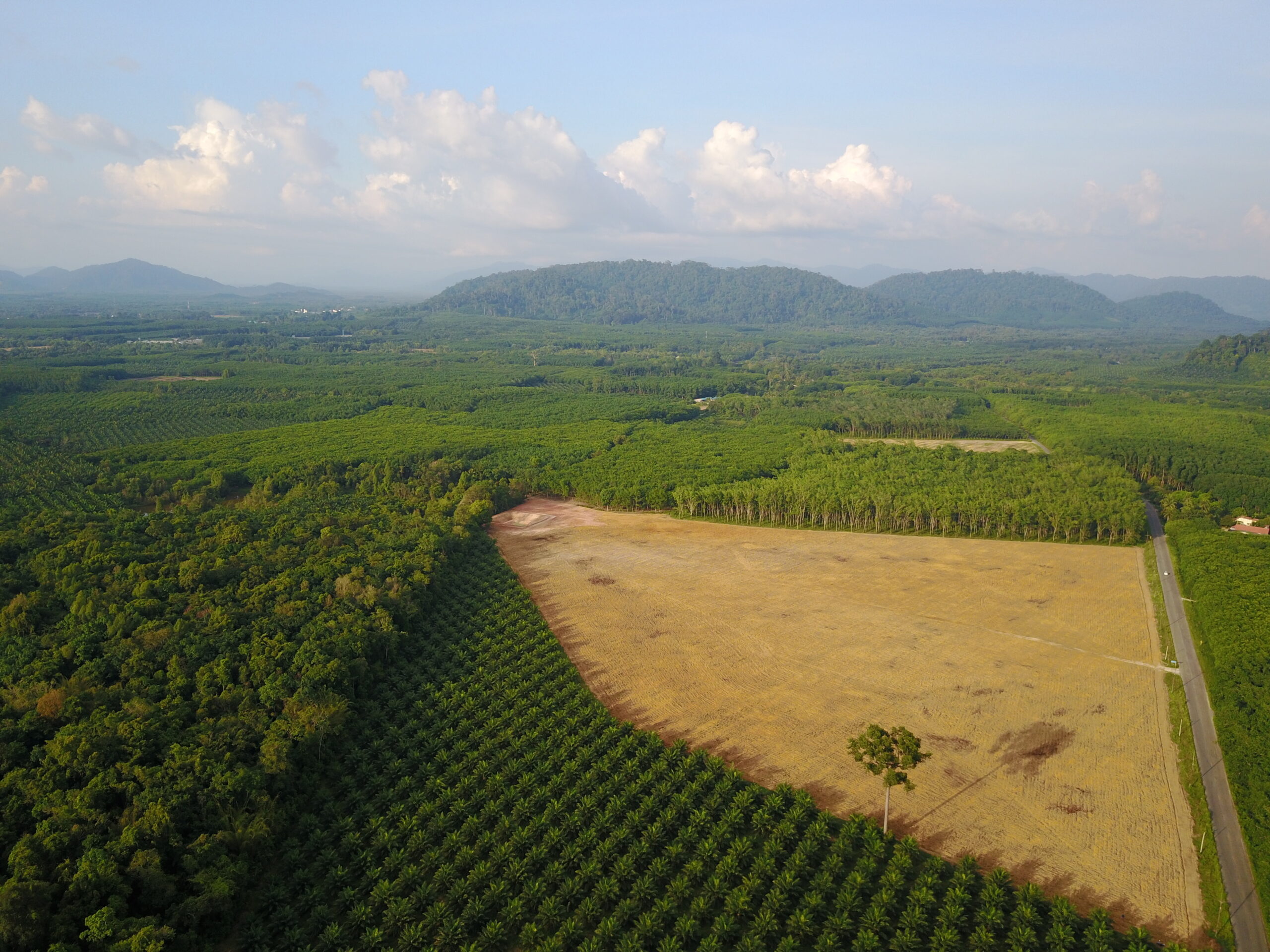
Palm oil plantation
Imogen explained: “From shampoo to cooking oil, palm oil is used across the globe every single day – yet its production has driven extensive deforestation, particularly in biodiverse tropical regions. According to FAO data, from 1970 to 2020, palm oil cultivation areas increased almost tenfold, from 3 million to nearly 30 million hectares – putting immense pressure on ecosystems, wildlife, and communities alike.”
ZSL’s Living Planet Index, published last month in WWF’s Living Planet Report 2024, highlighted how habitat loss – including the large scale-clearing of tropical forests for agriculture and forestry – is a major driver behind a 73% average decline in monitored wildlife populations over the past 50 years, highlighting the scale of this issue and underscoring the need for transparent action across supply chains.
As global demand for palm oil grows – with global production growing by approximately 24.3% between 2014 and 2023** – the challenge remains to balance economic growth with sustainable practices that protect forests and the communities and species that rely on them. SPOTT has tracked the world’s largest palm oil companies over the past decade to enhance ESG transparency and has directly engaging with the industry to strengthen ESG policy and practices. This year alone, 50% of companies have improved their disclosure scores following our engagement.
Imogen highlighted the important role investors and buyers must play in tackling the issue: “Transparency must extend beyond palm oil producers, processors and traders, ensuring that companies sourcing palm oil products also have clear visibility into their supply chains. Our media monitor has identified food and beverage giants like Mars, Ferrero and Nestle are sourcing from companies that have been linked to alleged deforestation events including: AAK AB, Bunge, Cargill, Louis Dreyfus Company, Musim Mas, Olam International, Sime Darby, and Wilmar. These brands wield considerable influence in shaping the industry, and we commend their efforts in disclosing their suppliers and encourage them to keep pushing for change on the ground through scrutinising supplier practices and providing financial and technical support for positive change.”
SPOTT’s media monitor*** reflects this ongoing scrutiny, capturing 749 negative media articles on deforestation and biodiversity over the past decade – the highest across all ESG categories. This sustained media focus, even as reports decline, is a clear reminder: the pressure on companies to meet their zero deforestation commitments is far from over.
Imogen added: “With only five years left to meet the global goal of ending deforestation, the urgency for action has never been greater. The palm oil industry has shown the huge efforts that can be made to drive sustainable agricultural production, but actors across the value chain must come together to push the industry forward and translate all commitments into robust, effective actions.
“Making deforestation-free, sustainable palm oil the industry standard demands a strong, collaborative push from all stakeholders. Companies must regularly conduct deforestation monitoring throughout their supply chains, while buyers should lead with transparency, strict sourcing policies and active support for suppliers, and investors must adopt bold deforestation policies and proactively engage companies lagging in sustainability practices.”
ZSL believes nature can recover, and that conservation is most effective when driven by science. With both COP16 and COP29 this year putting a spotlight on nature, we call for science to guide all global decisions on environment and biodiversity and build a healthier future for wildlife, people and the planet. Find out more and support ZSL’s world-leading, collaborative science and conservation work at www.zsl.org
* SPOTT’s zero deforestation commitment indicator was introduced in 2017 to provide a more rigorous assessment of companies’ commitments to eliminating deforestation. Prior to this, from 2014 when the assessment began, SPOTT tracked whether companies had a “publicly available statement addressing deforestation resulting from its operations,” which did not necessarily reflect a formal, actionable zero deforestation commitment and could imply future intentions rather than current accountability.
** USDA Foreign Agricultural Service: Palm Oil | USDA Foreign Agricultural Service
*** SPOTT tracks media coverage across multiple ESG themes, including deforestation and biodiversity, to provide stakeholders with insights into the public and media perception of companies’ on the ground actions.
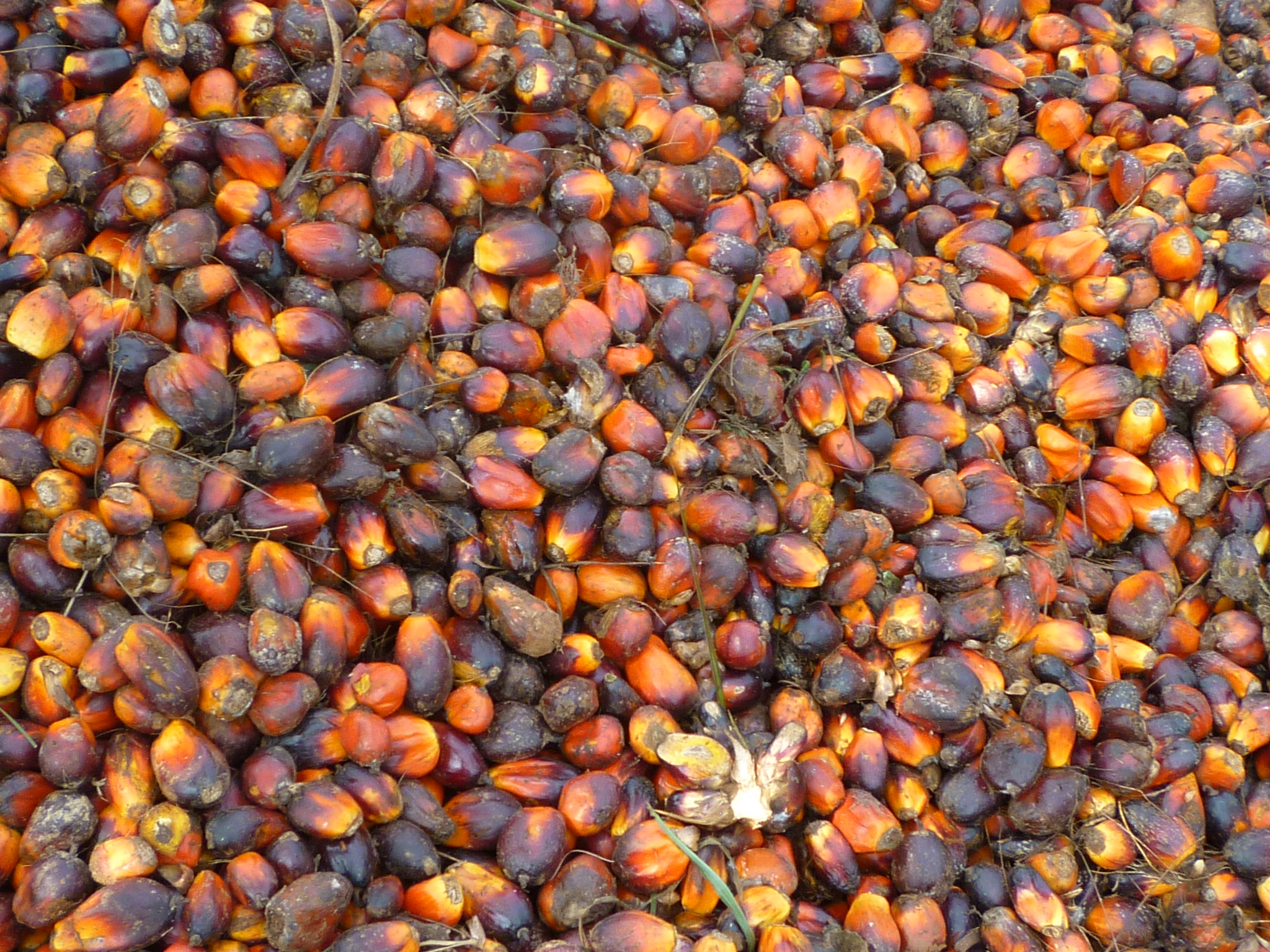
Oil palm fruits by Sophia Gnych
The innovative data platform Forest IQ has been named “One-To-Watch” by the Global Good Awards 2024. The award is given to businesses, NGOs, charities and social enterprises that are blazing the trail for purpose-driven sustainability and ethical leadership globally.
“We are delighted that Forest IQ has been awarded One-To-Watch in the Global Good Awards Finance Player of the Year,” said Freya Bannochie, Forest IQ Lead at Global Canopy, when she attended the award ceremony held in London in October.
Forest IQ has over 1,000 users across all sectors
Created by three leading not-for-profit data providers in this space, Global Canopy, Stockholm Environment Institute (SEI), and the Zoological Society of London, Forest IQ brings together the best available, actionable data on how more than 2,000 major companies are addressing their links to deforestation.
“To address deforestation risk in their portfolios as efficiently as possible, investors need standardised data and metrics. That is why we launched Forest IQ less than a year ago,” said Freya.
“Forest IQ is a game-changing innovation that allows financial institutions to lead the way in tackling deforestation in their portfolios and meet net-zero targets in the process,” reads the Global Good Awards’ motivation for Forest IQ.

Freya Bannochie and Lina Latincic at Global Canopy receive the Global Good Award in London. Photo: Global Good Awards 2024 – Jonathan Perugia / Gaia Visuals.
Since its launch in 2023, Forest IQ now has more than 1,000 users globally, with the majority from northern Europe. The response from the market shows that financial institutions want to understand their exposure to deforestation risk.
Data feeding into Forest IQ is partly provided by Trase, a supply chain transparency initiative by Stockholm Environment Institute and Global Canopy.
“The success of Forest IQ, and the recognition it has received, is a testament to the hard work and collaboration of countless people behind the scenes. Within Trase, we produce and share innovative supply chain and impact data with the potential to help inform a variety of positive actions, and it is great to see the role our outputs have played in Forest IQ,” said Simon Croft, SEI Research Fellow at the University of York.
“Thanks to the Global Good Awards and judges, and a huge congratulations to all the other winners, nominees and finalists – we are truly in great company,” Freya concluded.
More information
|
About the Global Good Awards
The Global Good Awards reward businesses, NGOs, charities and social enterprises of all shapes and sizes around the world, which are blazing the trail for purpose-driven sustainability and ethical leadership. They recognise leaders who are achieving practical, real-world impact that is both scalable and replicable – and who have inspiring stories to tell.
Founded in 2015 by Karen Sutton, the Global Good Awards is leading the awards sector by walking the talk across all areas of sustainability and being something of a disruptor in the overall events industry space.
|
We would like to invite you to provide feedback to us on the SPOTT Natural Rubber indicator framework ahead of the 2025 assessments.
Each year we review the indicator framework to ensure it is in line with best practice and provide more detail/clarity on how information is scored. The consultation period starts today and lasts three weeks, please read the framework and provide feedback on indicators.
A copy of the indicator framework in Excel format can be downloaded here. Column G contains the new scoring criteria, with updates to text in blue and deleted text in red. Column J summarises the changes to the framework.
Proposed changes to scoring criteria are due to the evolution of best practice, alignment with improvements in the SPOTT Timber and Pulp and Palm Oil frameworks, and a result of feedback from assessed companies and other stakeholders.
We propose two significant changes this year:
- Traceability Practice indicators (#37, 39, 40, 42, 43), scoring on the disclosure of percentages of supply traceable, will now award additional points if data is externally verified. For example, a disclosure stating 50% of supply is traceable would score 0.5 points, if that data has been externally verified the score will be 1.5. Please see the SPOTT Methodology for the rationale behind awarding additional points and what constitutes external verification.
- Indicator #44. ‘Submitted self-declaration form for the Sustainable Natural Rubber Initiative (SNR-i)’ has been deleted. After repeated attempts to contact the IRSG about SNR-I with no response, ZSL is resigned to acknowledge the scheme is no longer operational.
We appreciate the time it takes to review a framework so if you are limited in capacity filter column J to see all changes from 2024, but feedback on all indicators is welcome. Please add any feedback in column W labelled ‘Reviewer comments’ and email your Excel to sam.ginger@zsl.org – the last date for providing feedback on the revised indicators is Friday 25 October.
Assessment Timeline 2025
- November-December 2024 – Analysts score company reporting and create a draft SPOTT assessment for each company
- January/February 2025 – assessed companies are consulted on their draft assessments for 4 weeks
- Late March 2025 – the finalised assessments are published on the SPOTT website
If you would like to discuss the indicator framework or assessments in more detail, please get in touch. If you are having issues downloading the framework we can send the Excel file via email.
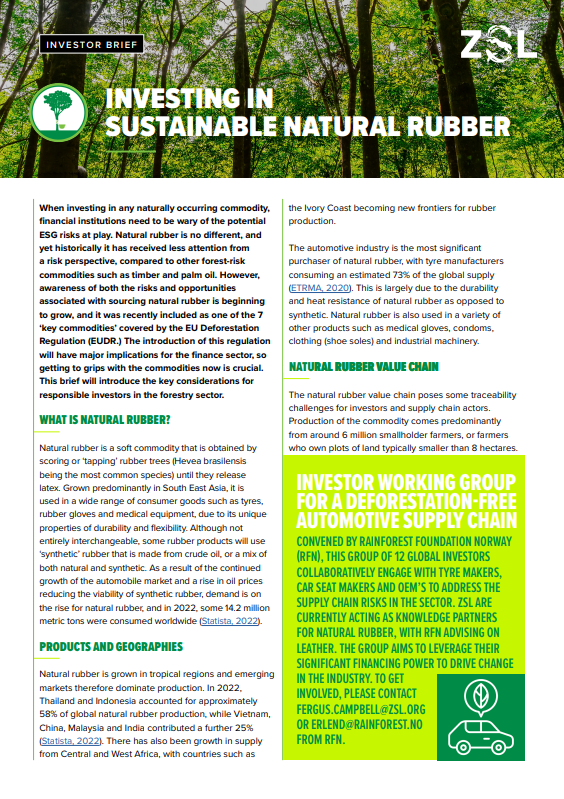
Gain insights into investing responsibly in the natural rubber sector through our new guide focusing on key aspects such as value chain, production locations, regulatory framework and ESG risks. Download ZSL’s investor brief on natural rubber.
As financial institutions increasingly consider the environmental, social, and governance (ESG) risks associated with commodities, natural rubber is emerging as a key focus. Historically overshadowed by other forest-risk commodities like palm oil and timber, natural rubber is now gaining attention, particularly following its inclusion in the EU Deforestation Regulation (EUDR). This regulation mandates rigorous due diligence and traceability for forest-risk commodities, highlighting the urgent need for investors to understand the complexities of natural rubber sourcing.
Natural rubber, derived from latex harvested from rubber trees, is a vital material in various products including tyres, medical gloves, and industrial machinery. Predominantly produced in Southeast Asia, it is essential to numerous global industries. However, the sector faces considerable ESG challenges, including deforestation, biodiversity loss and labour issues. With significant production concentrated among smallholder farmers and processing bottlenecks adding to traceability difficulties, investors must navigate these risks carefully.
This brief outlines key considerations and emerging trends for investing responsibly in natural rubber, emphasising the importance of transparency, proactive engagement with industry stakeholders and addressing ESG risks.
Eight years of ZSL assessment and engagement show lack of progress in timber and pulp sector, urgent action needed from industry, buyers and investors to fulfil commitments
The tropical timber and pulp sector is falling vastly short of its traceability and zero deforestation reporting, new research from international conservation charity ZSL reveals.
Published today (28 August 2024), ZSL’s latest SPOTT assessment – marking a decade of the conservation charity’s work in advancing public disclosure in soft commodity supply chains – reveals that most of the world’s 100 most significant tropical timber and pulp companies have made limited progress in disclosing their zero deforestation and traceability commitments, despite growing pressure to halt deforestation worldwide by 2030.
Scoring companies on their commitments to and reporting of sustainable and ethical practices, the assessments found that companies scored on average 24.1%, a decline from 37.1% in 2017 when the assessments began. This reflects a concerning – and continuing – lack of public engagement with environmental, social and governance (ESG) issues such as deforestation, biodiversity loss, and Indigenous Peoples’ and local communities’ (IPLCs) rights.
Even when excluding pre-2019 data—marking the implementation of a stricter and more comprehensive SPOTT scoring criteria—the overall score has remained low, fluctuating from 20.9% in 2019 to 24.1% in 2024.

Sam Ross, ZSL’s Sustainable Business Project Analyst who led the assessment, said: “We have seen small signs of progress, but the overwhelming story has been one of inertia. Despite years of pressure and attempted engagement, our data shows many tropical forestry companies continue to fail in reporting even basic ESG data. Together, these top 100 companies manage forests almost the size of France – so their actions impact a significant area of the world’s forests.”
ZSL calls on timber and pulp companies to take urgent and proactive steps towards greater transparency, and for their buyers to demand it. With increasing regulatory pressure and global environmental goals tightening, it is more crucial than ever for companies to help secure the future of tropical forests, safeguarding both wildlife and the more than 1 billion people who rely on these ecosystems.
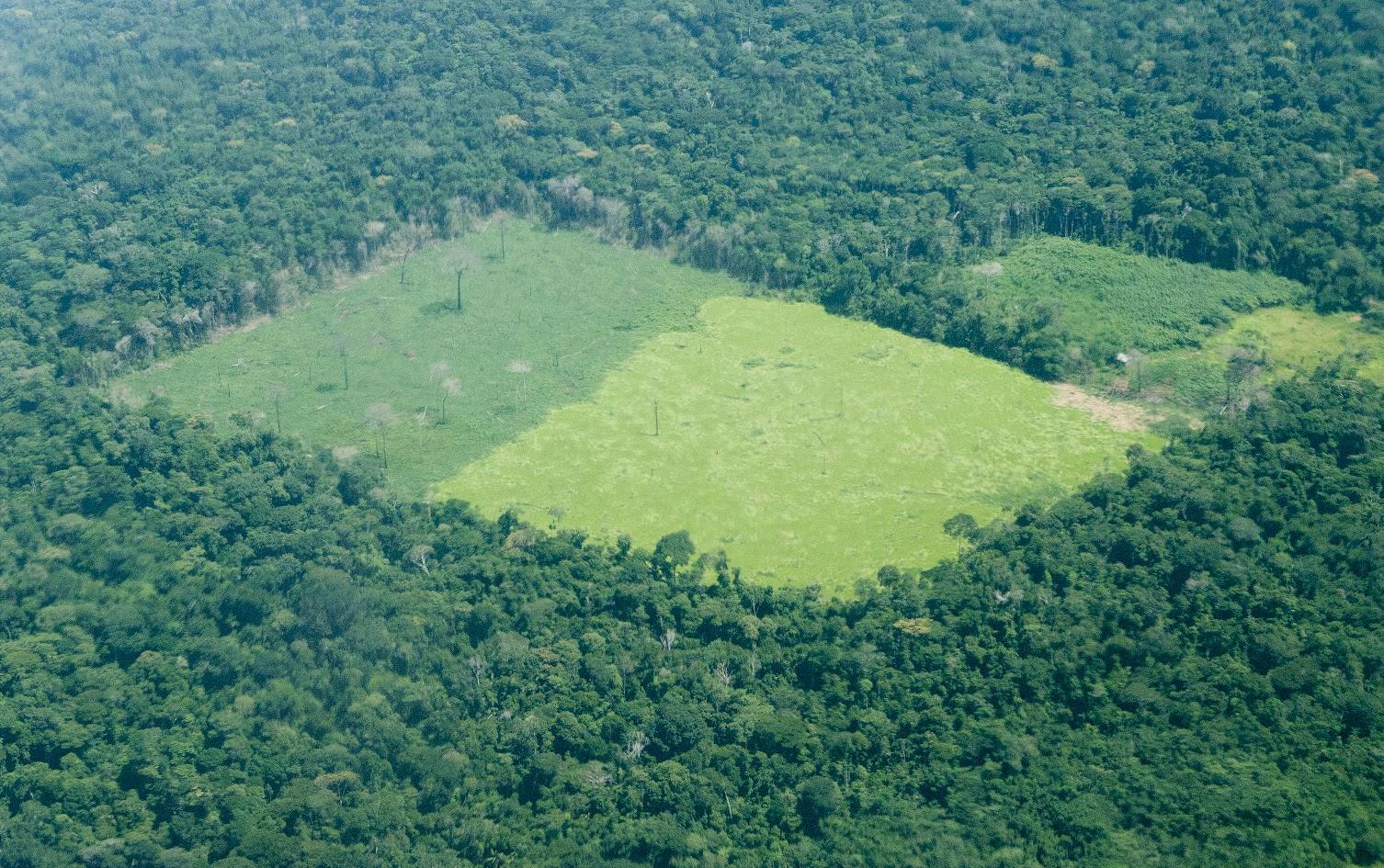
Deforestation in the Amazon by David Johnston
Sam explained why buyers and investors must take a critical stance and hold timber and pulp companies accountable to protect our planet’s most vital ecosystems: “After eight years of research, it’s clear that transparency is unlikely to come from the tropical forestry sector alone. Given their significant market presence and influence through sourcing and investment decisions, buyers and financers must play a crucial role by requesting detailed data, demanding transparency, and pushing for accountability within the sector.
“By doing so, they can provide a layer of accountability that complements regulations such as the incoming EU Deforestation Regulation, which will soon require companies importing to EU markets to conduct due diligence and demonstrate their products are deforestation-free, although it does not currently mandate public disclosure of this information.”
The SPOTT team found that some of the world’s largest consumer goods manufacturers – including Nestlé, Mars, Hershey’s, PepsiCo, Colgate-Palmolive and Procter & Gamble – source pulp and paper for packaging from SPOTT-assessed companies. SPOTT commends these companies for publicly disclosing their suppliers and encourages other buyers of timber and pulp to do the same.
Beyond public disclosures, buyers must enhance due diligence by consistently monitoring supplier progress and cross-referencing data, including using SPOTT’s media monitor, which tracks media coverage of company activities and highlights that high scores do not always translate to on-the-ground action.
Given tropical forestry companies’ direct management of large swathes of the planet’s most biodiverse terrestrial ecosystems, ensuring they operate sustainably and transparently is vital. Despite covering just 6% of the Earth’s surface, tropical forests play a crucial role in regulating the climate and providing habitat for countless species – including Critically Endangered Sumatran tigers, orangutans and African elephants – as well as millions of people living in and around them, many of whom depend on these forests’ resources for survival.
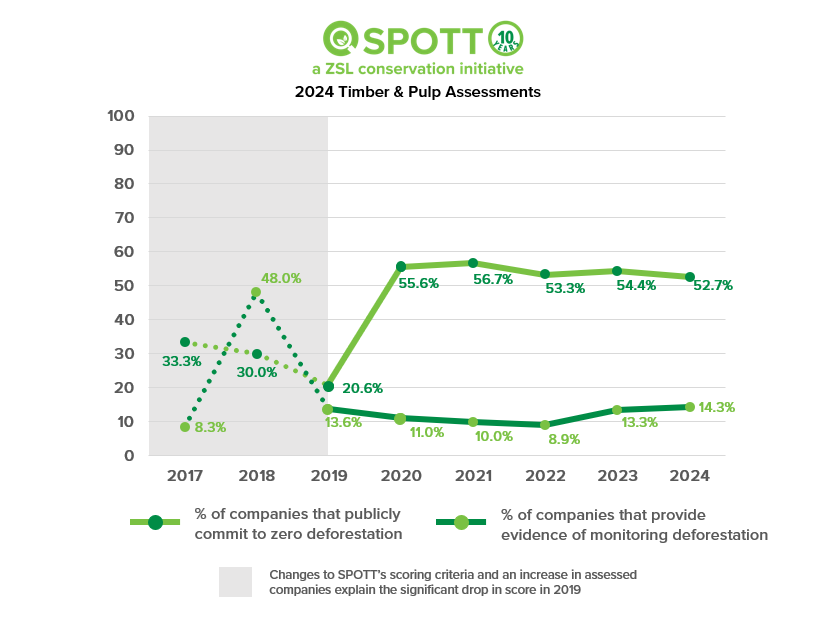
There has been a growing recognition of the value of forests in addressing the climate and biodiversity crises within the private sector. This was marked in 2021 at COP26, where the private sector joined world leaders to commit to halting and reversing forest loss by 2030. However, SPOTT’s data shows widespread inaction among the companies operating in these forests, demonstrating a failing to match the level of urgency required to tackle this problem. While over half of the companies have commitments to zero deforestation, evidence of implementation over the past eight years has been minimal. The percentage of companies monitoring deforestation within their operations has seen only a slight increase, from 13.6% in 2019 to 14.3% in 2024.
The assessment also highlights the critical issue of secrecy surrounding tropical forestry supply chains – one of the main barriers to the investigation and verification of ESG claims. Even among sustainability leaders within the sector, SPOTT’s research shows that public reporting of supplier information is almost non-existent. Results showed only 1/88 timber companies published geo-referenced maps of all the forests they source from, and only 1/85 companies disclosed the names and locations of all of their supplying mills.
Sam added: “Many of the issues around unsustainable practices in the tropical forestry sector are compounded by opaque supply chains – most companies do not report who they are sourcing from and even fewer disclose where their suppliers are located. This void of information can make it incredibly difficult to identify links between companies, and increases the risk of companies sourcing from bad actors in the supply chain without being held accountable.”
To foster real change, ZSL has established a team of experts offering tailored advisory services to support buyers and financial institutions in advancing their deforestation and biodiversity goals. By collaborating with ZSL, organisations can implement science-based solutions and adopt best practices that align with global sustainability objectives.
ZSL believes nature can recover, and that conservation is most effective when driven by science. We call for science to guide all global decisions on environment and biodiversity and build a healthier future for wildlife, people and the planet. Find out more and support ZSL’s world-leading, collaborative science and conservation work at www.zsl.org
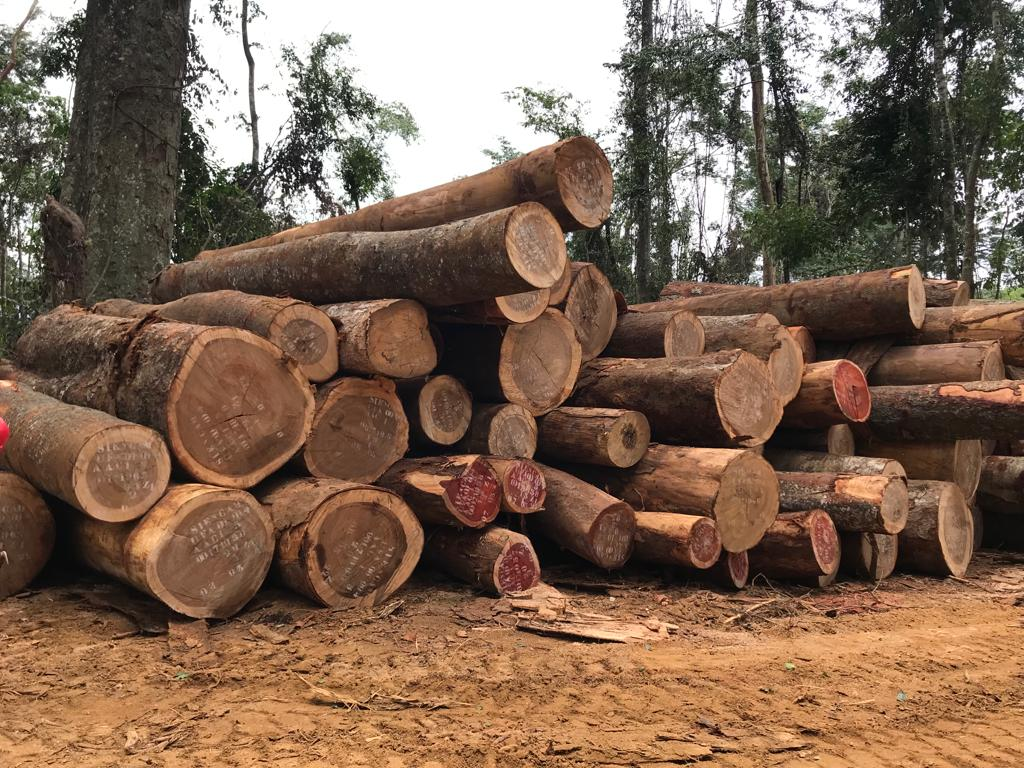
Logging in Cameroon by Armstrong Mba
Five years of ZSL assessment and engagement show progress in natural rubber sector, but further action needed from industry to fulfil commitments
The majority of the world’s largest natural rubber companies have published comprehensive sustainability policies, reveals ZSL’s latest assessment of the sector – while also highlighting a serious lack of reporting on implementation, traceability and smallholder engagement.
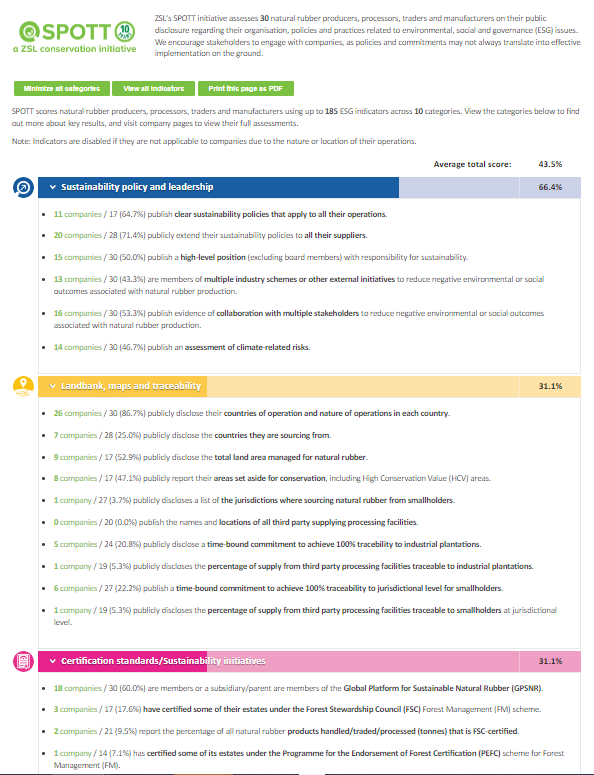
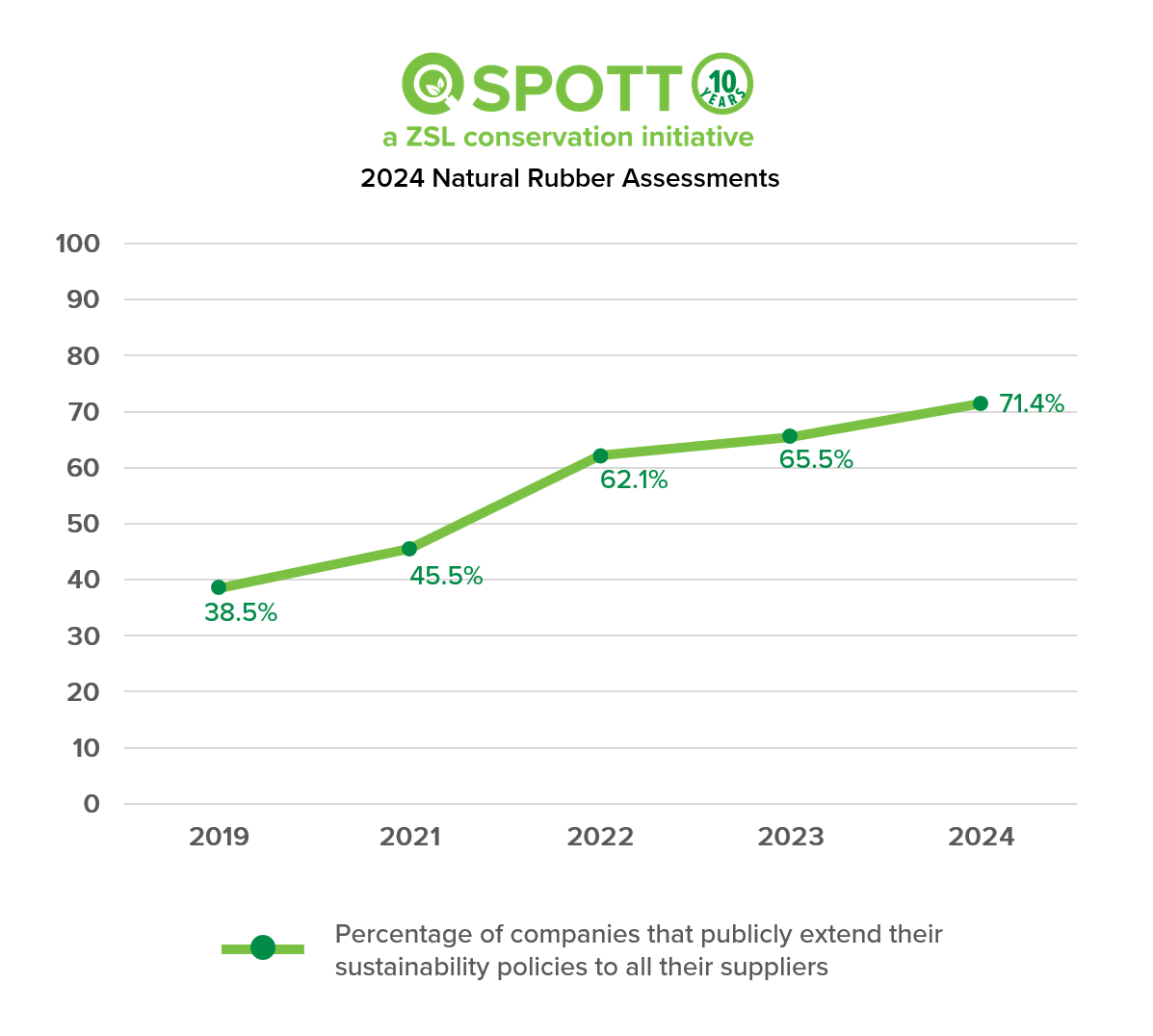
Today (26 March 2024), the SPOTT platform from international conservation charity ZSL reveals the results of its fifth annual natural rubber assessment, indicating a notable advancement in scores relating to their environmental, social and governance (ESG) policies. Over 70% of companies now publish comprehensive sustainability policies across their supply chains—a significant improvement from 39% in 2019. This progression of publishing these policies suggests the sector is building a foundation for policy implementation, yet the journey remains extensive, with time running short as our climate and biodiversity crises reach critical thresholds.
Sam Ginger, ZSL’s Sustainable Business Specialist who led on the report said: “The global demand for natural rubber, predominantly used to manufacture tyres, drives tropical deforestation – this not only devastates biodiversity but also fuels global warming, ultimately making it more difficult to grow rubber trees. It’s encouraging to see the sector publishing sustainability policies in recognition of its impact on natural ecosystems – the next step is to ensure commitments are being acted upon.”
Despite the improvements in policy disclosures, their implementation remains critically low, with negligible progress in companies which report engaging with their suppliers on sustainability—only inching from 21% in 2019 to 27.7% in 2024. Additionally, while 71.4% of assessed companies now have zero-deforestation policies covering their whole supply chains, only 17.9% publish any information on how they monitor deforestation in supplier plantations. However, it’s expected that the EU Regulation on Deforestation-free Products, which requires all rubber imports to be traceable to plot of origin by 2025, will provide the much-needed push for companies to systematically map their supply chains and give buyers a direct line to engage suppliers on ESG issues such as workers’ rights and environmental protections.
The SPOTT results also highlight an increase in companies’ reporting on crucial sustainability information, including roles responsible for sustainability, collaborations tackling sustainability issues, and the publication of sustainability reports. However, most companies are yet to report detailed climate risk assessments for their operations and supply chains, with a 46.7% reporting rate in 2024 – up from 13% in 2019. This is particularly concerning given how, without intervention, predicted droughts and intensified rainy seasons could decimate rubber cultivation.
This report marks five years of SPOTTs annual assessments of the world’s leading natural rubber companies on their ESG-related public disclosures and reporting and comes as the platform marks a significant milestone of ten years advancing public disclosure within soft commodity supply chains.
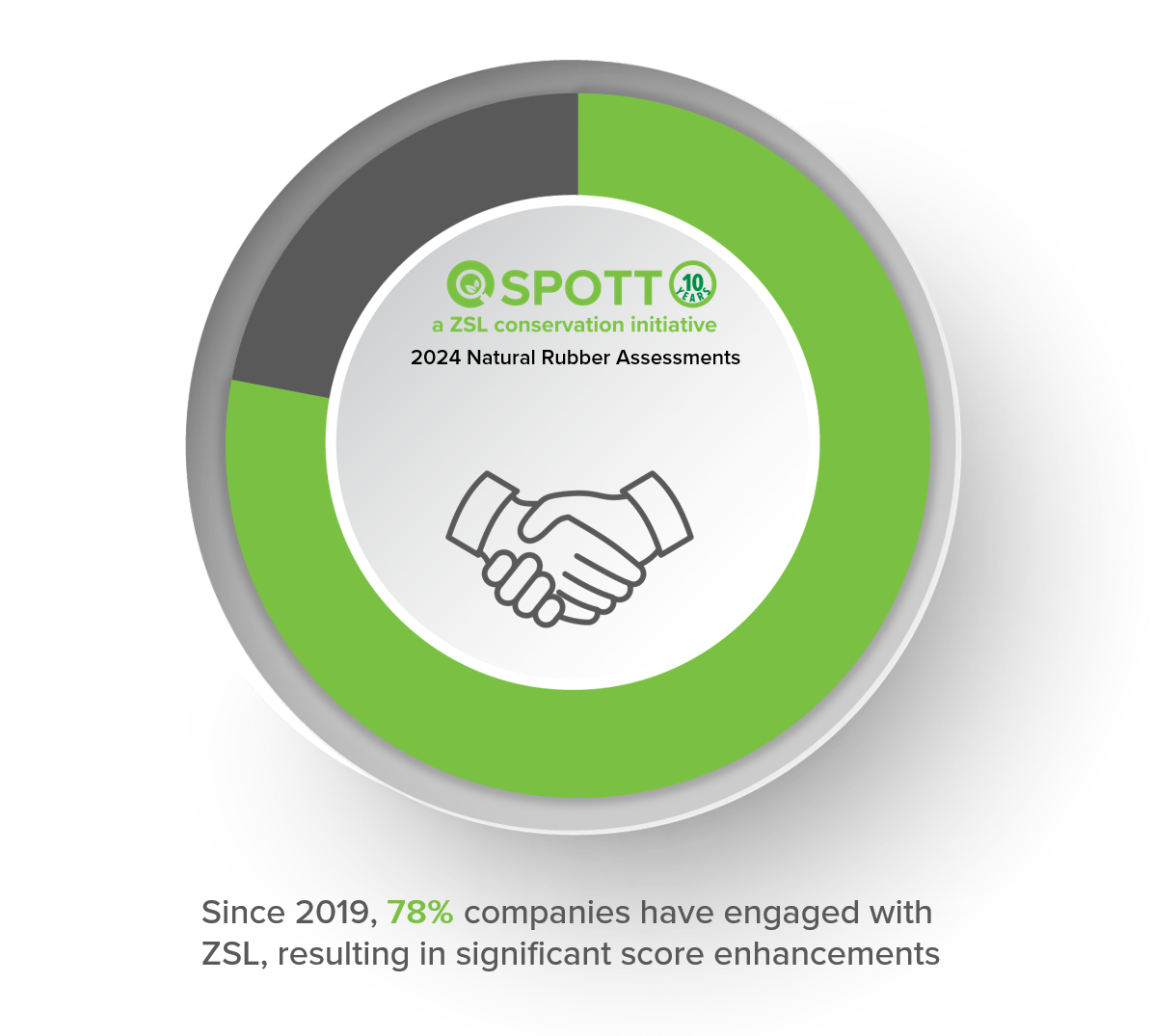
ZSL’s engagement with the sector has led to several notable improvements in public disclosure. An impressive 78% of natural rubber companies assessed on SPOTT have engaged with ZSL, resulting in significant score improvements through a process which identifies both gaps in reporting and opportunities to disclose new information. Companies that participated in the consultation period averaged a 59.5% score in 2024, compared to 25.3% for those with no contact with the SPOTT team.
In 2024, SPOTT-assessed company Sri Trang increased its score by 14 percentage points (pp) via direct engagement with ZSL; broadening its sustainability policies to include commitments for responsible chemical usage, to support smallholders and trace rubber supply, as well as reporting up to date figures on the amount of land they manage for rubber production and wildlife conservation. The company has seen one of the biggest overall increases on the platform, from 14.2% in 2022 to 53.1% in 2024, showcasing the value of dialogue and transparency. Other companies that showed marked improvements through engagement with the SPOTT team include Michelin, ITOCHU and SIPH, increasing by 31 pp, 20 pp and 13 pp respectively during engagements in the past three years.
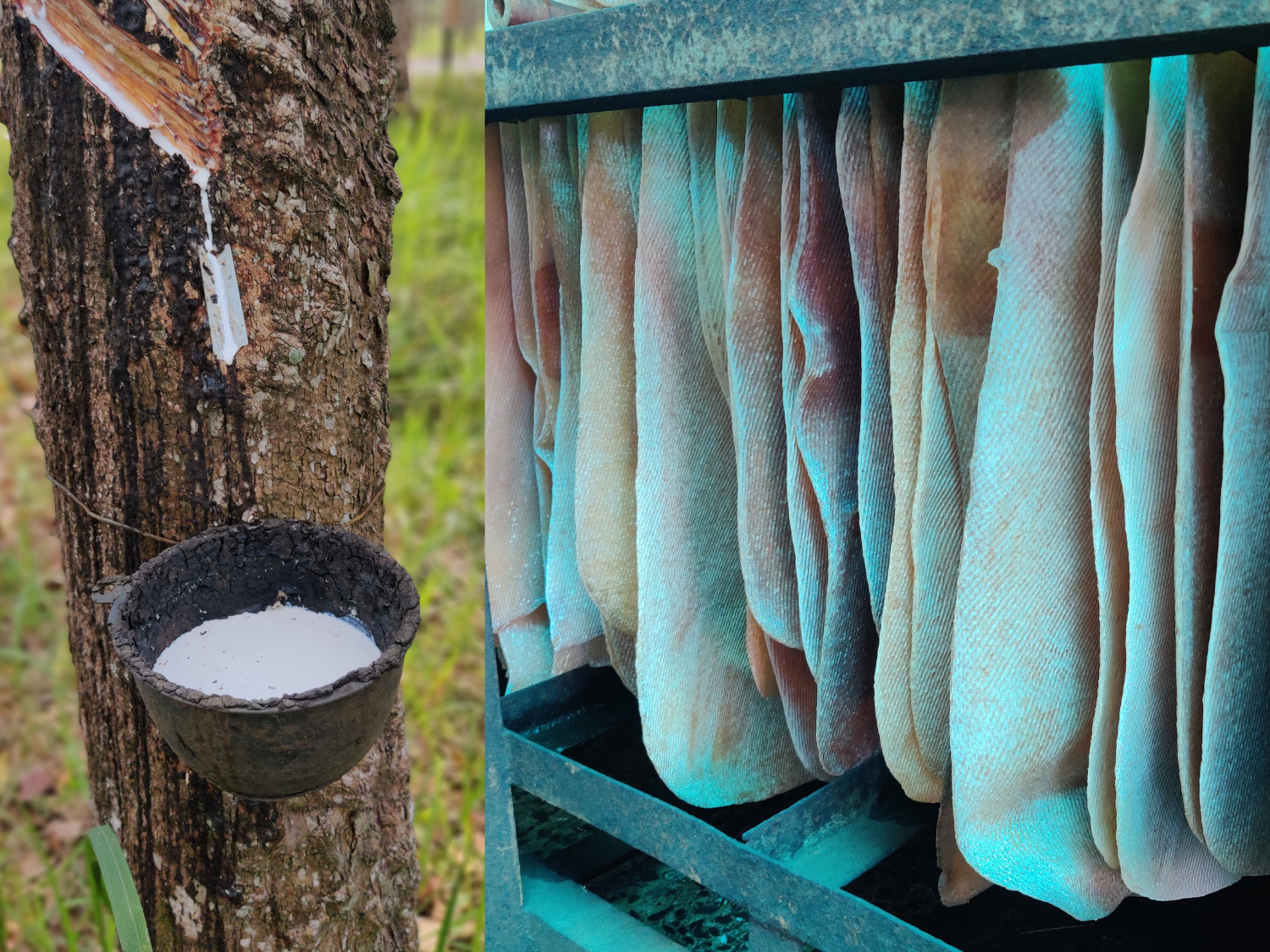
Latex being collected and processed in Thailand
Meanwhile, Groupe Blattner Elwyn, Guangdong Guangken Rubber Group Co Ltd (广东省广垦橡胶集团有限公司), HAGL Group, J.A. WATTIE Tbk, Kumho Tire, Toyo Tyre Corporation, Zhongce Rubber Group Co Ltd (中策橡胶集团有限公司) have yet to engage with the SPOTT team and are encouraged to do so as part of their movement towards sustainability.
While advancements in policy and reporting within the sector are commendable, the emphasis now must shift from establishing policies to the actual execution of commitments on the ground. In addition to only 17.9% of companies publishing evidence of monitoring deforestation, almost all companies score poorly on issues such as water use reduction, protective equipment and training, progress towards paying a living wage, and publicly disclosing grievances made against them.
Sam added: “In the next five years, we need to see a surge in action to build traceable and equitable rubber supply chains that restore nature and biodiversity. Otherwise, the foundations on which the sector relies – a stable climate, people to extract and process the rubber and healthy soils – will continue to deteriorate.”
ZSL believes nature can recover, and that conservation is most effective when driven by science. We call for science to guide all global decisions on environment and biodiversity and build a healthier future for wildlife, people and the planet. Find out more and support ZSL’s world-leading, collaborative science and conservation work at www.zsl.org
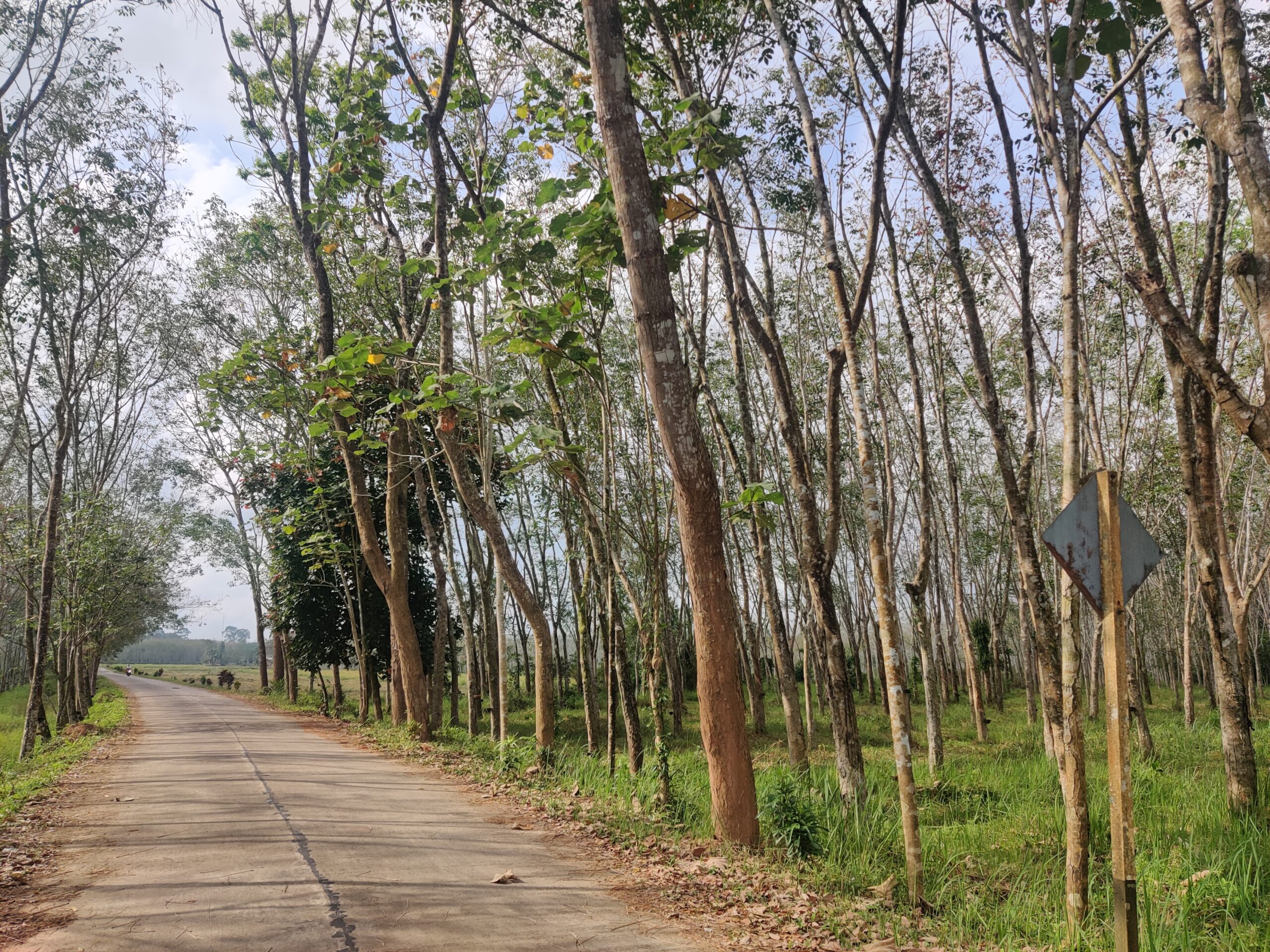
Natural rubber plantation in Thailand
| Position Title |
Ecotourism Consultant |
|
Location
|
Flexible within Central Africa |
| Contract Form |
Fixed Value Consultancy (GBP 18,750 plus expenses) |
| Department |
Sustainable Business & Finance |
| Directorate |
Conservation & Policy |
| Responsible to |
Conservation Enterprise Specialist (South Africa) and Sustainable Finance Manager |
| Approved by |
Senior Sustainable Finance Specialist |
About ZSL
The Zoological Society of London (ZSL), a charity founded in 1826, is a world-renowned centre of excellence for conservation science and applied conservation. ZSL’s purpose is to inspire, inform and empower people to stop wild animals from going extinct. This is realised by carrying out field conservation and research in over 50 countries across the globe and through education and awareness-raising at our two zoos, ZSL London Zoo and ZSL Whipsnade Zoo, inspiring people to take conservation action.
About the Project
Located in the Western Congo Basin and spanning across Cameroon, the Republic of Congo, and Gabon, the Tri-National Dja-Odzala-Minkébé (TRIDOM) region is a critical area for global biodiversity conservation, currently grappling with challenges such as deforestation and habitat fragmentation. Renowned for its extensive forests, which cover almost 97% of the landscape, TRIDOM is characterised by low human (about 1 inhabitant per km²) and road densities. This makes it a pivotal
region for conserving a diverse array of wildlife, including a significant population of over 25,000 elephants, gorillas, and chimpanzees. Additionally, the region is a home to the Indigenous BaAka population, numbering around 10,000 people.
With funding from the UK’s Biodiverse Landscape Fund (BLF) ZSL is leading the development of sustainable business and financing models to protect these essential forests. Initiatives like ecotourism are pivotal in ZSL’s strategy to establish sustainable financing mechanisms that bolster conservation efforts while simultaneously enhancing local livelihoods. Responsible ecotourism, especially, has become an important tool, offering a means to protect biodiversity and provide economic benefits to the local and Indigenous communities in the region.
Purpose
The Ecotourism Consultant will spearhead a comprehensive scoping study in the project area, roughly corresponding to the TRIDOM region of the Congo Basin. The study aims to assess the current state of tourism, evaluate government tourism plans, and identify priorities for destination development in terms of locations, facilities, experiences, and markets. This will lay the groundwork for future planning and sustainable tourism development, aligning with conservation goals.
Key Activities and Deliverables
Assess the current state of the tourism industry in the TRIDOM landscape, identify opportunities for tourism development and plan for the development of the eco-tourism sector through the lifetime of the project. Key Activities:
- Assessment of Tourism Landscape: Conduct a detailed analysis of the current state of tourism in the TRIDOM region, mapping businesses, infrastructure, services, and existing practices; Research and summarise current international, regional and national tourism market demands and identify market trends and segments that are relevant to the region. Assess the alignment of current government tourism plans with sustainable practices and conservation needs.
- Stakeholder Engagement and Analysis: Engage with government officials, tourism operators, local communities and other relevant stakeholders to gather insights and assess needs; Document engagements and analyse stakeholder input for integration into the strategic plan.
- Regional Tourism Development Roadmap: Identify strategic priorities for location development, facility enhancement, and the creation of unique tourist experiences and circuits; Develop a high-level strategic plan with recommendations for sustainable tourism development, including market strategies that consider environmental and cultural sensitivities.
- Workshop Presentation Present the draft findings at a stakeholder workshop, obtain feedback and finalise the strategic plan accordingly.
Deliverables and Timeline
| Deliverable |
Deadline |
| 1. Tourism Assessment |
30 June 2024 |
| 2. Stakeholder Engagement Report |
30 September 2024 |
| 3. Regional Tourism Development Roadmap |
31 December 2024 |
Travel Requirement
- Attendance at a kick-off meeting in Yaounde and meeting with government and operators in the region
- Regional engagement with tourism departments and operators in Brazzaville, Libreville (TBC) and within the project area
- Attendance at a final workshop within the region at a location to be determined.
Budget and Payment Schedule
| Line Item |
Amount Available |
| Technical inputs from consultant |
GBP 18,750 |
| Transport, accommodation and substinence |
Up to GBP 3,250 |
| TOTAL |
Up to GBP 22,000 |
Payment Schedule
- 25% on contract signature
- 25% on acceptance of deliverable one
- 25% on acceptance of deliverable two
- 25% on presentation at the workshop and acceptance of deliverable three
All claims for expenses are dependent on submission of a valid invoice and receipts for reimbursement. Alcoholic drinks and personal services except drivers and laundry are not valid for reimbursement. The consultant will be responsible for the payment of all taxes and charges associated with the works.
Selection Criteria
- A university degree (or at least 10 years of equivalent experience) in tourism, conservation, business, or a related field.
- Deep knowledge of the current state of tourism and its potential West Congo Basin, particularly in the context of regulations, wildlife, and habitats.
- Understanding of Indigenous peoples and local communities and cultural sensitivities and how to engage them in experience and enterprise development.
- Experience in tourism project development, budgeting, logistics, and health and safety.
- Strong communication, presentation, and reporting skills.
- Fluency in French, English (knowledge of local languages is an asset).
Application Process
Submit a CV and cover letter addressing the selection criteria to Andrew.Fowler@zsl.org by 18 March 2024