
News
Featured updates:
New Guide Supports Relationship Managers on EUDR and Deforestation Risk
Access the guide Why deforestation and biodiversity loss matter for the finance sector Deforestation accounts for nearly 30% of global greenhouse gas emissions and driving catastrophic biodiversity loss – trends that carry significant financial implications. Through their lending and investment…
The Future of SPOTT Assessments: Reflecting, Refining and Strengthening Our Impact
Sustainability is essential to long-term business success. Despite this, it is often ignored. Financial institutions on average provide £8.3 billion of financing to companies linked to deforestation – leaving markets, buyers and financers exposed to serious risks. ZSL is working…
Latest news:
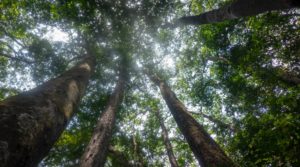
Tropical forestry companies failing to protect millions of hectares of tropical forest
Despite international agreements, analysis reveals widespread failure of timber companies to guarantee environmental protections for at least 11.7 million hectares of tropical forest. A new analysis of 100 of the most significant tropical timber and pulp companies, published by conservation charity ZSL, shows that: Over half (54%) do not…
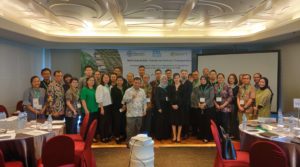
2020 Forestry Transparency Forum reports now online
As part of SPOTT’s ongoing work to help address illegal logging and unsustainable forestry practices in tropical forests, SPOTT held the second Forestry Transparency Forums in Douala, Cameroon and Jakarta, Indonesia in February and March 2020. Building on the 2019 series of Forums, the workshops…
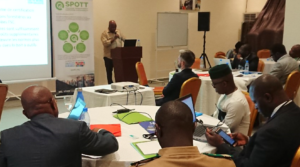
ZSL holds 2nd Forest Transparency forum in Douala, Cameroon
One year after the first edition of the Forum, the event gathered twenty-five forestry sector participants, including seven SPOTT-assessed companies, and industry bodies such as the Groupement de la Filière Bois au Cameroun, (GFBC) and…
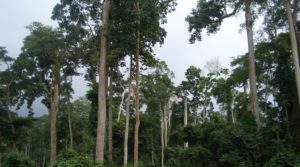
SPOTT and the Open Timber Portal partner to promote transparency in the tropical timber sector to tackle illegal logging
Tropical timber markets are increasingly regulated at all stages of the supply chain. Forest codes in producer countries frame the way lands are allocated for timber production, define the requirements for management plans, and set harvesting rules. At the other…
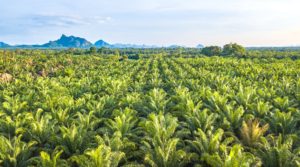
Palm oil: a business case for sustainability
To date, arguments used to persuade the palm oil industry to improve its practices have focused, quite rightly, on the ecological and moral cases for change. However, these arguments have not yet been enough to convince all…
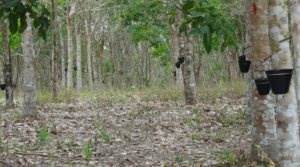
Unsustainable natural rubber poses major threat to wildlife and people
Used in everyday products, such as tyres, yoga mats, shoes and condoms – global natural rubber production is lacking the transparency and subsequent sustainability commitments to protect both people and wildlife. That is the finding of the world’s…
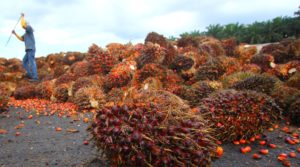
ZSL report finds majority of companies don’t know origin of their palm oil
International conservation charity ZSL (Zoological Society of London) today calls on global businesses to step up scrutiny on palm oil, as a new analysis by the charity reveals that the majority of the world’s most significant palm oil…
Improving tracking of transparency and progress: updates to SPOTT assessments
As we approach 2020 and the deadline for several corporate commitments nears – including collective commitments by the Consumer Goods Forum and New York Declaration on Forests endorsers – there is an urgent need to…
Tropical forestry sector failing to assess impacts of climate crisis
Only 6% of the world’s most significant timber and pulp producers and traders with operations in the tropics are taking steps to assess the impacts of climate change – posing a risk to the forestry industry and all…
The need for spatial data transparency in the tropical forestry sector
The world’s remaining forests are being degraded and lost at a dramatic pace: it is estimated that each second, more than one hectare of tropical forest, an area slightly larger than a standard football pitch, is affected…