Announcement of Consultancy
Ama – (Associação do Meio Ambiente), headquartered in the city of Pemba, Rua 15, Casa nr. 292, Quarteirão 08, Unidade B, Bairro Cimento, hereby informs that under the “Our Sea Our Life” project funded by Ocean Community Empowerment and Nature Programme (OCEAN) by the UK International Development, in partnership with ZSL (Zoological Society of London) in the province of Nampula, hereby invites interested parties to submit a letter of interest to provide consulting services on blue carbon and biodiversity offsets and credits (Consultant on Sustainable Financing Mechanisms for Mangrove Protection and Restoration in Nampula province)
Deliverables
- Enabling Environment Review
- Site mapping and ground truthing
- Stakeholder identification and engagement plan
- Threat assessment, activity plan and budget
- Mechanism assessment
- Credit model
- Feasibility report
Selection Criteria
- Be a single or collective entity with a valid licence;
- Possess Nuit
- Expertise in carbon assessment and application, legal review and analysis, report writing, geospatial mapping, and carbon modelling.
- Expertise in biodiversity offsets and an understating of the Mozambique offsets regulation.
- An understanding of land tenure and rights in Mozambique and their implications for the development of voluntary carbon projects.
- Understanding of types of carbon standards and project methodologies, as well as high integrity voluntary carbon projects.
- Knowledge of the current state of the carbon market, particularly in Mozambique.
- Strong stakeholder engagement experience with communities and government from NGOs and the private sector.
- Experience of field mapping and ground-truthing mangroves or similar environments.
- Understanding of indigenous peoples and local communities, cultural sensitivities, and how to engage with them project development.
- Fluency in English and Portuguese (knowledge of local languages is advantageous)
Application Process
Submit a CV and cover letter that addresses the key selection criteria to bronwyn.trafford@zsl.org by 15 December 2025
The palm oil sector risks undermining global efforts to meet forest and climate commitments, warns the team behind ZSL’s latest assessment of transparency in palm oil supply chains.
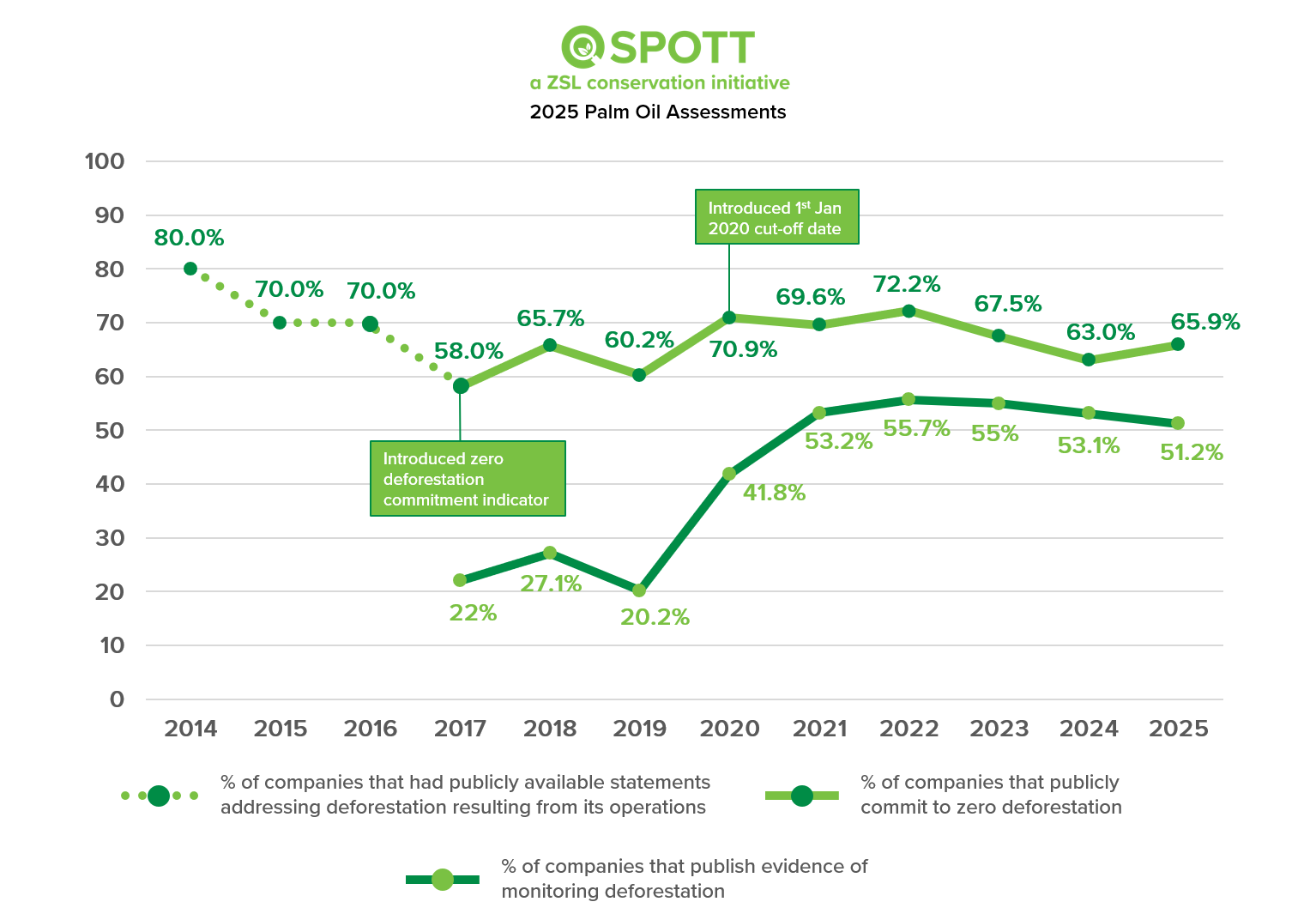
The latest SPOTT assessment – which assessed the transparency of 100 of the world’s top palm oil producers, processors and traders – found that only 51% of assessed companies publicly share evidence of monitoring deforestation, despite palm oil’s current status as one of the major drivers of deforestation worldwide.
The assessment is published ahead of the UN Climate Change Conference in Brazil, where the crucial role of forests and our progress in protecting them will be central to discussions around safeguarding a more secure future for all.
While the last eleven years of SPOTT assessments have revealed an increase in commitments to tackling deforestation, the lack of transparency around implementation means many palm oil suppliers still cannot demonstrate to buyers and investors that their operations are not driving forest destruction – putting both buyers, global markets and critical ecosystems all at risk.
International conservation charity ZSL is calling on the palm oil sector to step up their responsibilities around transparency and implementation of sustainability commitments – and in doing so, support a better future for people and planet.
Imogen Fanning, Sustainable Business Advisor at ZSL who led the assessment, said: “Protecting our planet’s tropical forests is about securing a future that benefits people, businesses and wildlife alike. We’re all interconnected. Palm oil plantations need stable climates to grow, but the unsustainable loss of carbon-storing trees and peatlands accelerates climate change and drives more extreme weather – putting the entire industry at risk, eroding supply-chain resilience and undermining livelihoods, especially for small-scale farmers.
“Up to 40% of supermarket products contain palm oil, meaning this ingredient is part of our everyday lives – yet unsustainable practices put everyone at risk. By supporting sustainable palm oil production and instead protecting the world’s forests, investors and consumers alike are helping create a more secure future.”
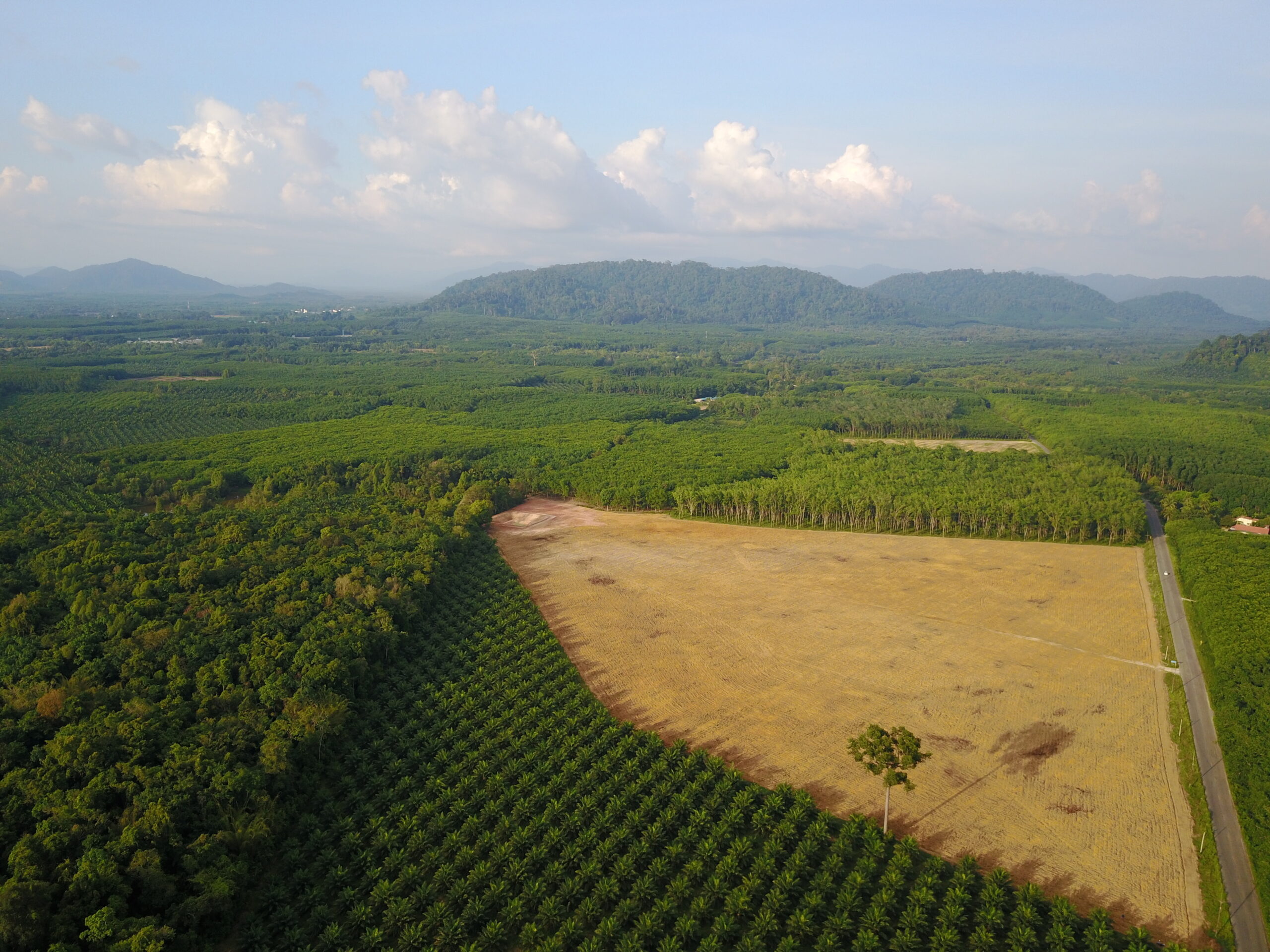
Palm oil plantation
SPOTT palm oil assessments over the last eleven years have revealed continued progress in the number of companies making zero-deforestation commitments. In 2017, 29 out of 50 assessed companies reported commitments to ending deforestation. Today’s assessment reveals that 54 out of 82 companies have now made these commitments.
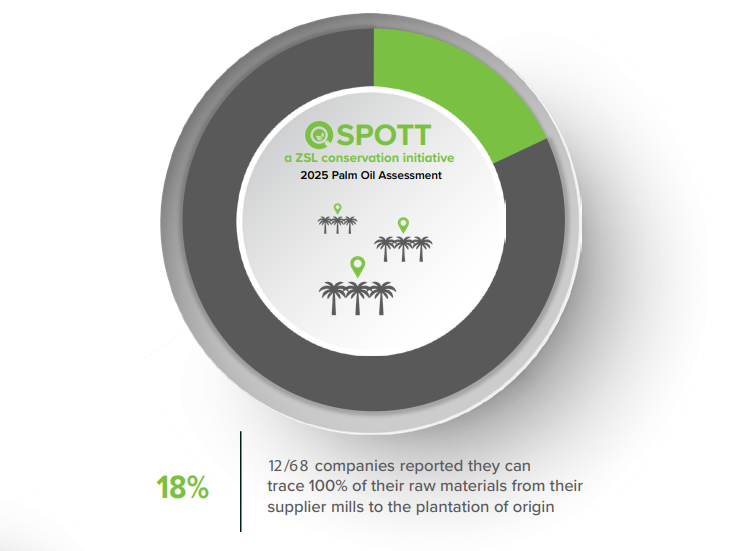
However, the assessment also reveals that key traceability gaps remain, with only 18% of companies reporting they can fully trace their supplies to plantation origin, undermining their ability to track risk of deforestation in suppliers’ operations.
The assessment is published a fortnight after the Forest Declaration Assessment 2025 identified that the world is off track by 63% in meeting goals to achieve zero deforestation by 2030. ZSL’s Living Planet Index, published last year in WWF’s Living Planet Report 2024, highlighted how habitat loss is a major driver behind a 73% average decline in monitored wildlife populations between 1970 and 2020.
Agriculture as a whole is responsible for over 90% of global tropical deforestation, with palm oil among the biggest contributors – so the major palm oil companies, which control most global volumes, are pivotal: their policies and practices set the bar for the sector.
Imogen added: “Our goal is to support suppliers and buyers to create a sustainable future for both their businesses and the planet. That future depends on resilient supply chains that protect the people and wildlife that underpin them – and that all begins with greater transparency around company practices, giving buyers and investors the insight they need to make responsible, informed decisions.”
Much of the land used for palm oil production has involved conversion of the dense, biodiverse rainforests of Southeast Asia – primarily in Indonesia and Malaysia. Some of the areas most at risk of further expansion are in West and Central Africa and in South and Central America – including Brazil, where the UN Climate Change Conference will be held.
Buyers and investors can push for greater transparency by demanding stronger traceability to plantations, and sourcing palm oil under the Identity Preserved or Segregated supply chain models to ensure the separation of certified and non-certified palm oil. Investors and financiers can set clear traceability performance criteria, engage companies to monitor and pressure for progress, and promote sectoral collaboration.
ZSL is dedicated to building a world where people and wildlife can thrive, and the SPOTT assessments are one part of their work to support businesses and financial institutions in meeting their commitments and regulatory requirements to protect the ecosystems we all rely on.
The 2025 Palm Oil Assessment marks a pause in the SPOTT assessments while the team review how best to further this mission over the coming years, which will be funding dependent.
ZSL believes nature can recover, and that conservation is most effective when driven by science. We call for science to guide all global decisions on environment and biodiversity and build a healthier future for wildlife, people and the planet. Find out more and support ZSL’s world-leading, collaborative science and conservation work at www.zsl.org
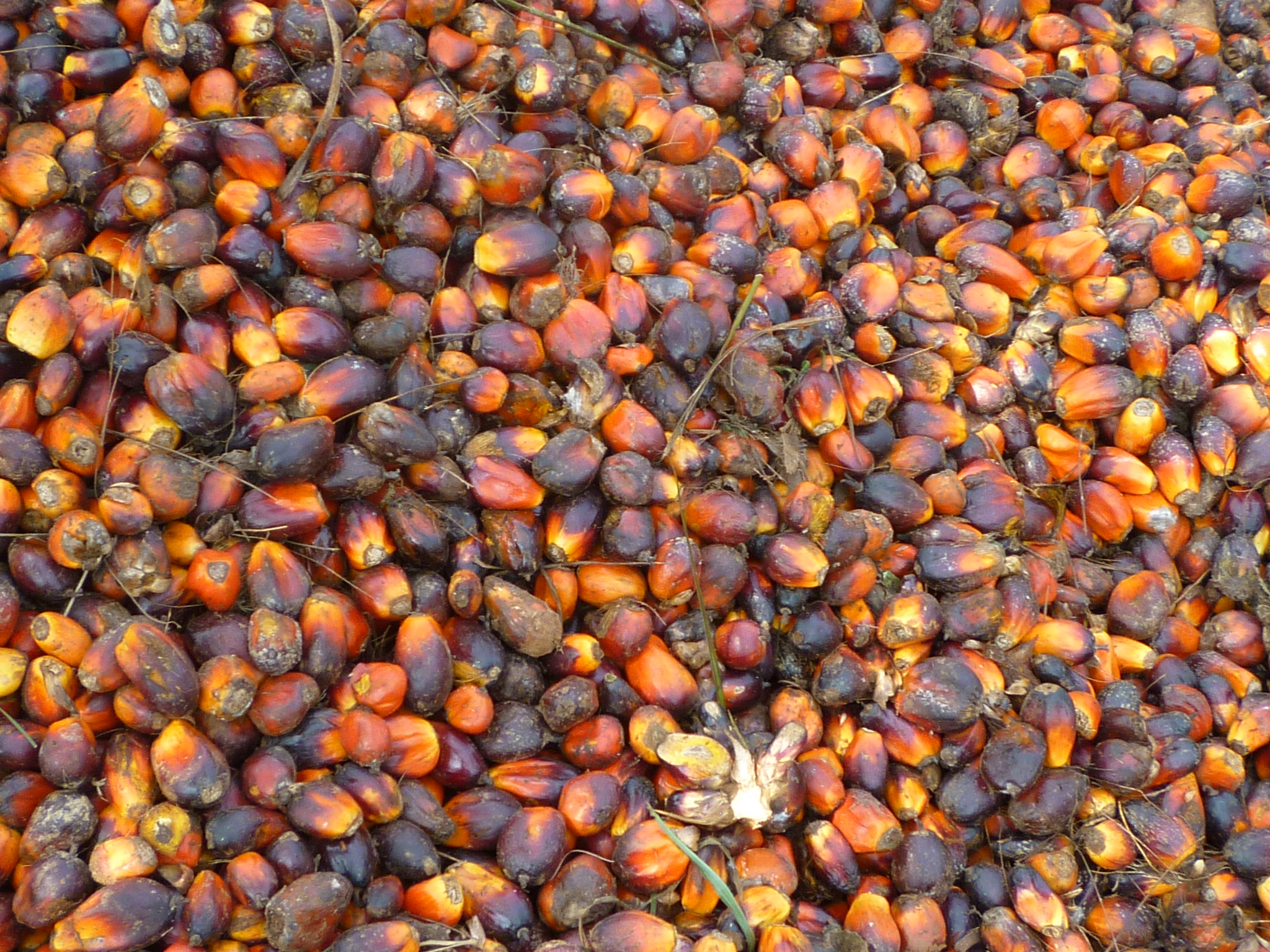
Oil palm fruits by Sophia Gnych
The majority of the world’s leading tropical forestry companies are failing to disclose where their wood and pulp come from – according to the latest SPOTT assessment from international conservation charity ZSL – with the lack of transparency putting markets at serious risk as downstream buyers and financiers are left exposed to mounting scrutiny and legal pressures.
The global trade in timber and pulp is worth more than USD 480 billion a year (FAO, 2023), meaning even small traceability failures can put billions in market value and investment at risk.
ZSL’s 2025 assessment of 100 of the world’s top tropical forestry companies found that just 18% disclose the countries they source from, with only 4% reporting what share of their supply is traceable all the way to forest management unit (FMU) level. Without this transparency, companies cannot demonstrate to customers or investors that their timber is responsibly sourced.
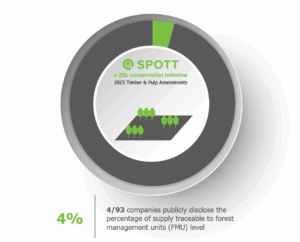
The assessment also found that none of the assessed companies publish georeferenced maps for all their third-party FMUs, and only 3% report what share of their supply is verified as deforestation-free, revealing a major blind spot in supplier-level traceability and accountability.
ZSL is calling on timber and pulp companies to adopt the tools already available to them to close these gaps. By doing so, they can protect buyers and investors while showing genuine commitment to safeguarding the forests that both underpin a stable global climate and the very markets that timber companies depend on.
Sam Ross, ZSL’s timber expert who led the assessment, said, “Protecting these forests isn’t optional – they keep our water clean, filter our air, and stabilise our climate. Safeguarding them means safeguarding life as we know it.
“These gaps threaten upstream companies’ market access, investor confidence, and compliance with tightening regulations – and the risk cascades down the supply chain. For downstream buyers, the lack of clear sourcing data can undermine even the most advanced verification tools, such as satellite monitoring and scientific origin testing. Public disclosure is the essential first step in the due diligence process. All verification tools rely on knowing a product’s claimed source.”
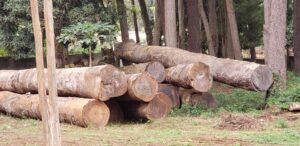
Freshly harvested tropical timber logs stacked at a forest edge in the Eastern Region of Cameroon
The assessment comes at a pivotal time for both the world’s forests and for forestry companies. In just two months, the UN Climate Change Conference (COP30) – set be hosted in the heart of the Amazon – will put forests and their future firmly in the global spotlight. The international convention sits against the backdrop of the fast-approaching deadline to halt deforestation worldwide by 2030 and the incoming EU Deforestation Regulation (EUDR), which is set to take effect in December 2025.
The rate of tropical forest loss has doubled since 2021, with the equivalent of 18 football fields disappearing every minute. Logging alone was responsible for an estimated 335,000 hectares of loss in 2024.
Sam added: “With international deadlines and the global summit on tackling climate change on the horizon, the pressure is mounting for timber companies. They must not only be transparent about where their materials are coming from, but also whether it is deforestation-free. We need these companies to show that they’re serious about their role in protecting the ecosystems that we all rely on.”
SPOTT-assessed companies manage more than 43 million hectares of forest, putting them in a pivotal position to help tackle the mounting crisis. Yet only 10%, responsible for managing around 8 million hectares, publish geo-referenced maps for all their FMUs, leaving the rest unable to demonstrate where deforestation and forest degradation may have taken place.
Without robust traceability systems, the likelihood of illegal logging entering supply chains rises sharply. Globally, illegal logging and illicit timber trade account for an estimated 15-30% of all timber traded, fuelling corruption, enabling land grabs, and, in some cases, driving violence against communities.
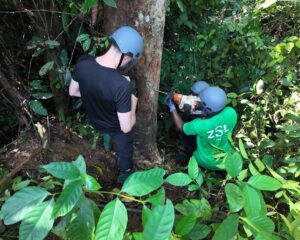
ZSL taking wood samples in Cameroon, contributing to World Forest ID’s global timber reference library
Sam added: “The solutions are already available. Active supplier engagement, satellite monitoring and independent third-party verification can all strengthen traceability systems and provide the confidence that markets and investors need. What’s missing is not the technology, but the will to use it.”
Scientific origin testing is one available technology that is seeing strong engagement across the value chain. ZSL is supporting the development of the World Forest ID reference library through the collection of wood samples for species widely traded in Central Africa. These will allow for the analysis of wood products to verify whether their claimed origin is accurate, adding evidence where paper trails fall short.
ZSL works with companies, financiers, and stakeholders worldwide to strengthen traceability, ensure legal compliance, and protect biodiversity. The team is ready to support with a suite of services, from due diligence and supply chain risk assessment to biodiversity monitoring and verification, helping businesses and financial institutions meet their commitments and regulatory requirements.
Through SPOTT, ZSL shines a light on performance and highlights where urgent action is needed, but without continued funding, SPOTT assessments cannot continue. Members of the public can visit donate.zsl.org/spott to support.
ZSL believes nature can recover, and that conservation is most effective when driven by science. We call for science to guide all global decisions on environment and biodiversity and build a healthier future for wildlife, people and the planet. Find out more and support ZSL’s world-leading, collaborative science and conservation work at www.zsl.org
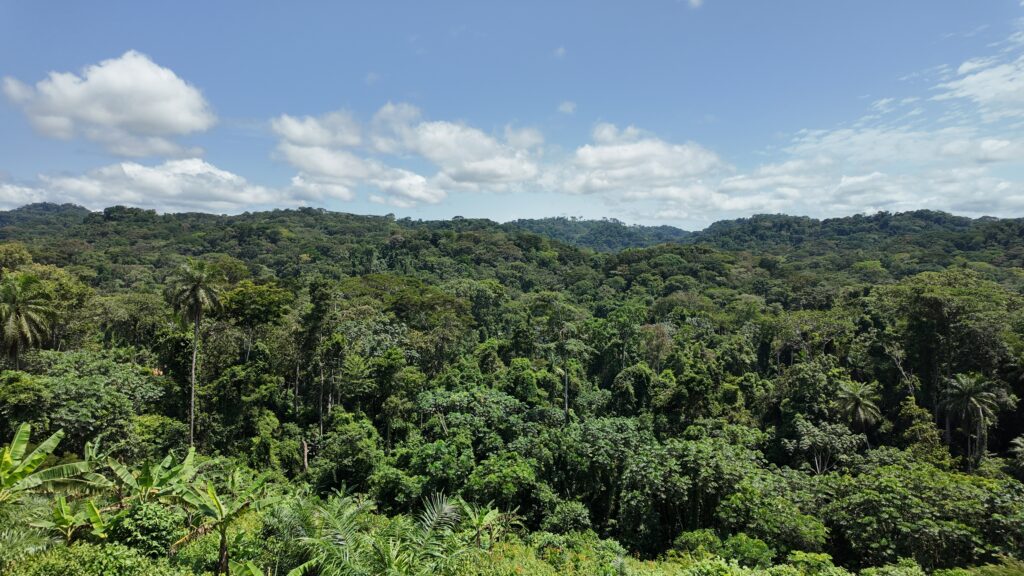
Forestry concession in Cameroon
SPOTT and Earthtrust share a vision: transparency backed by evidence drives trust and accountability

By increasing transparency in forest-risk commodity sectors, SPOTT helps safeguard forests
In an era of growing consumer awareness and demand for sustainability, transparency has become the cornerstone of trust in responsible practices. Here, we understand transparency as the practice of openly sharing information that is easily accessible and understandable to all stakeholders, including consumers, investors, and the public, fostering trust and accountability. But with increasing scepticism and the spectre of greenwashing looming large, it is no longer enough for organisations to simply assert their commitments or claim they’ve delivered them.
There are too many cases where claims have proven untrue, leading to stakeholder mistrust. This highlights the need for organisations to provide clear, accessible evidence to substantiate their claims and verify their actions. Transparency is strengthened through accountability, which enables stakeholders to make informed judgments and fosters a culture of integrity that supports meaningful progress toward a sustainable future.
Earthtrust, a pioneering platform dedicated to transparency and accountability, shares this commitment to transparency with SPOTT, a leading global initiative developed and managed by ZSL for assessing commodity producers’ ESG disclosures. SPOTT and Earthtrust both seek to strengthen the delivery of transparency within the sustainability sector.
About Earthtrust
Earthtrust is a Danish registered limited liability company dedicated to empowering organisations to build trust through transparency. By providing a platform for companies to share their claims and verifying documentation, Earthtrust enables companies to build their brand on trust and for stakeholders to independently assess the credibility of those claims. Earthtrust is committed to fostering a culture of accountability and continuous improvement in sustainability practices.
About SPOTT
SPOTT, developed by ZSL, is a free online platform that assesses commodity producers, processors, and traders on their public disclosure regarding ESG issues. By tracking transparency, SPOTT incentivises the implementation of corporate best practices, helping stakeholders make informed decisions.

Satellite imagery helps verify company claims and strengthen transparency in forest-risk commodity supply chains – supporting zero deforestation goals
Why transparency matters
Transparency is essential for driving meaningful change in any practice, particularly those who claim alignment towards sustainability and regeneration goals, and to reward organisations that are implementing strong sustainability programmes. It allows consumers, investors, and other stakeholders to make their own informed decisions based on clear, accessible information, on scientific data and documentation.
By promoting external verification of these claims, SPOTT and Earthtrust believe that together, we can combat the pervasive issue of greenwashing, where companies make misleading claims about their social and environmental impact without providing the evidence to back them up. By providing a platform to share this information, Earthtrust enables companies to substantiate their claims and build trust with stakeholders. SPOTT assesses information shared publicly by companies to develop a transparency score, placing greater emphasis on the progress reported in implementing commitments, which is classified as self-reported, externally verified, or verified through certification.
This approach, revised in 2019 in response to stakeholder demand, recognises the importance of external verification and aims to strengthen the credibility of assessments by rewarding second- and third-party verified information while still acknowledging self-reported progress. Although SPOTT does not conduct on-the-ground verification, it captures existing verification efforts thereby enhancing the overall transparency of sustainability claims. To support companies, SPOTT also provides practical guidance for those beginning to incorporate external verification or other sustainability best practices into their supply chains. SPOTT and Earthtrust recognise that clear, accessible, well- structured, scientifically based information is vital for driving meaningful progress. Together, the organisations aim to empower companies to enhance their ESG reporting, accountability and most importantly, their innovation and continuous improvement to greater impact.
Scott Poynton, Earthtrust CEO, emphasised the significance of this shared transparency commitment:
“For more than a decade, SPOTT has been leading the work to support organisations to disclose details about their ESG programmes. Through their assessments, organisations have been inspired to do more. Disclosure is an important first step, but transparency—supported by accessible evidence and verification—helps build greater trust in the information shared. With Earthtrust’s platform, we create the opportunity for organisations to share data and documentation to verify that they’re doing what they say they’re doing. It’s an additional layer of disclosure that will go a long way to build trust.”
Annabelle Dodson, ZSL’s Sustainable Business Project Manager, said:
“At SPOTT, we see transparency as more than just disclosure—it’s about demonstrating real progress backed by clear, accessible evidence. Our assessments are designed to help companies communicate not only what they intend to do, but what they are actually achieving. By encouraging external verification and supporting platforms like Earthtrust, we aim to build greater confidence in sustainability efforts and support stakeholders in making informed, responsible decisions.”
A shared vision for transparency
Both Earthtrust and SPOTT recognise that enhancing transparency is not just about compliance; it’s about creating a culture of accountability that drives positive change. SPOTT’s rigorous assessment framework provides a valuable tool for companies to benchmark their progress against over 180 sector-specific ESG indicators. This framework encourages organisations to disclose their policies and practices, thereby increasing their transparency.
In turn, this public disclosure inspires companies to strive for greater accountability. Sharing information openly for all to see and understand is fundamentally different from limited, private disclosures; it creates an ongoing commitment to transparency and improvement, with no finish line in sight. With transparency, companies have an incentive to go beyond current standards and to innovate to greater impact. When that transparency and innovation is rewarded through strong brand recognition, more sales and greater investment, companies win, and so do people and the environment.
SPOTT and Earthtrust share this commitment to inspire greater, more positive impact from company sustainability programmes. We believe that transparency and accountability is the foundation for improved outcomes for all.
Building a transparent future together
We believe that transparency is an ongoing journey. And we encourage organisations to treat their claims as dynamic entities that can evolve over time. By regularly updating claims with new data and insights, organisations can maintain credibility and demonstrate their commitment to continuous improvement.
As we move forward, we invite companies to join us in this journey toward transparency. Together, we create space where trust is earned, not assumed, and where evidence replaces empty promises.
For more information on how to enhance your organisation’s transparency and accountability, visit Earthtrust and explore SPOTT’s assessments to understand how transparency is evaluated in forest-risk sectors.
| Position Title |
Sustainable Finance Specialist (Tiger Conservation Coalition) |
|
Location
|
Flexible within Asia – Thailand, Malaysia, Nepal or Bhutan preferred |
| Contract Form |
Full-time equivalent consultancy (225 days/year) |
| Contract Period |
Two years |
| Contract Value |
Dependent on location |
| Department |
Sustainable Business & Finance |
| Directorate |
Conservation & Policy |
| Responsible to |
Senior Sustainable Finance Specialist (Asia) |
| Approved by |
Head of Department |
| Payment Terms |
Monthly on submission of invoices, with evidence of work and
expense claims |
About ZSL
The Zoological Society of London (ZSL), a charity founded in 1826, is a world-renowned centre of excellence for conservation science and applied conservation. ZSL’s purpose is to inspire, inform and empower people to stop wild animals from going extinct. This is realised by carrying out field conservation and research in over 50 countries across the globe and through education and awareness raising at our two zoos, ZSL London Zoo and ZSL Whipsnade Zoo, inspiring people to take conservation action. Sitting within the Sustainable Business & Finance Department, the Sustainable Finance Programme aims to close the $1 trillion financing gap for nature, through working both on the demand side with investors to increase the financing for nature, and on the supply side to develop investible, nature positive projects and enterprises.
About the Tiger Conservation Coalition
The TCC brings together leading biologists and experts in wildlife crime, human-wildlife coexistence, policy, finance, development, and communications, with unprecedented alignment on achieving tiger conservation at scale. Its member organisations include the International Union for Conservation of Nature (IUCN), the Environmental Investigation Agency; Fauna & Flora; Natural State; Panthera; TRAFFIC; the United Nations Development Programme (UNDP); the Wildlife Conservation Society; Worldwide Fund for Nature (WWF) and the Zoological Society of London (ZSL). The recruitment supports the Tiger Conservation Coalition’s goal to develop sustainable financial strategies for tiger conservation aiming to mobilise USD 1 billion in additional funding by 2034, as pledged at the Sustainable Finance for Tiger Landscapes Conference in Bhutan on April 2024.
A key element of the sustainable financing strategy of the TCC is to select, design, develop and test various financing mechanisms in selected tiger landscapes, tailored to address specific conservation threats and deliver measurable conservation outcomes. The TCC has previously commissioned sustainable financing plans for four tiger landscapes across five countries, including Bhutan, Malaysia, Kazakhstan, India and Nepal. The plans assessed over 20 nature financing mechanisms and identified the most suitable ones based on their relevance and feasibility. The Sustainable Finance Specialist will build on these plans to further work on the sustainable finance mechanisms in three of the landscapes, as outlined in this Terms of Reference.
Purpose
The Tiger Conservation Coalition (TCC) is looking for a Sustainable Finance Specialist or an environmental economist (to be based with ZSL) to support the development and implementation of nature financing instruments in support of tiger and tiger landscape conservation across current and former tiger range states.
Major Duties and Responsibilities
- Develop and maintain a work plan for the activities to be undertaken by the Sustainable Finance
Specialist under the scope of this ToR
- Review and analyse the existing financing plans to select up to two mechanisms per landscape to
test
- Perform further analytical work for the conceptual development, refinement and customization
of the selected instruments, including but not limited to financial/economic analyses and
calculations, revenues, expenditure and impact modelling, activity design and scenario-based
forecasting to ensure the financial viability and alignment to conservation goals
- Develop detailed implementation plans for the selected mechanisms
- Define the legal, implementation, and monitoring and verification frameworks, including but
limited to required partnerships, regulatory needs, and operational steps for each pilot
- Consult or guide the consultation with local stakeholders to assess willingness and readiness to
participate in or contribute to the financing schemes
- Support the fundraising, investment readiness and roll-out of sustainable finance mechanisms in
collaboration with local partners
- Share lessons learned and best practices with the Tiger Conservation Coalition
- Provide an outline of a sustainable finance strategic approach and action plan to be approved by
the TCC and Finance Sub-Committee Chairs
- Facilitate technical discussions during TCC meetings and join Working Group meetings as and
when required between TCC members.
The duties and responsibilities described are not a comprehensive list and additional tasks
may be assigned from time to time that are in line with the level of the role
Key Selection Criteria
- Degree in a topic related to sustainability, finance and/or biodiversity or equivalent work
experience
- Experience in research and analysis on topics related to sustainable finance
- Experience of working with international teams in cross-cultural environments
- An understanding of financial institutions and the investment, lending and asset management
process
- An understanding of key trends and topics in sustainable finance and investing in nature
- Experience writing grant applications and/or consulting proposals
- Experience manipulating and analysing quantitative datasets
- Demonstrated passion for nature and biodiversity
- A willingness to travel nationally and internationally.
Application Process
Submit a CV and cover letter that addresses the key selection criteria to reuben.clements@zsl.org
by 12pm BST on Monday, 23 Jun 2025
| Position Title |
ZSL India Enterprise Consultant |
|
Location
|
Flexible within India, with travel to Palk Bay region |
| Contract Form |
Fixed Value Consultancy (GBP 10,000 plus expenses) |
| Department |
Sustainable Business & Finance |
| Directorate |
Conservation & Policy |
| Responsible to |
Conservation Enterprise Specialist & Project Manager |
| Approved by |
Sustainable Finance Programme Manager |
About ZSL
The Zoological Society of London (ZSL), a charity founded in 1826, is a world-renowned centre of excellence for conservation science and applied conservation. ZSL’s purpose is to inspire, inform and empower people to stop wild animals from going extinct. This is realised by carrying out field conservation and research in over 50 countries across the globe and through education and awareness-raising at our two zoos, ZSL London Zoo and ZSL Whipsnade Zoo, inspiring people to take conservation action.
About the Project
The Palk Bay region of Tamil Nadu is home to diverse coastal and marine ecosystems, including seagrass meadows, coral reefs, and endangered species such as the dugong. Local communities rely heavily on fishing and natural resources, making sustainable livelihoods a priority.
Through its Sustainable Business and Finance Programme, ZSL is exploring community enterprise models in the Palk Bay region that align with conservation and sustainable development goals. This consultancy will assess the feasibility of three local enterprise opportunities: ecotourism, solid waste management, and seaweed aquaculture, supporting pathways to investment and long-term benefit-sharing for coastal communities.
Purpose
The Local Enterprise Consultant will conduct a feasibility and business model study for three local enterprise types. The role will include market and stakeholder analysis, capital cost assessments, and identification of steps to investment. The consultant will liaise closely with ZSL experts and engage with key supply chain actors to gather critical input for designing viable, inclusive, and sustainable enterprises.
Key Responsibilities
- Enabling Environment Review
Identify the key regulations determining the operations of ecotourism, solid waste management, and seaweed aquaculture in the Palk Bay region.
Conduct market demand and supply chain assessments for each enterprise, identifying trends, competitors, and buyer interest.
- Business model development
Develop tailored business models for each enterprise, including cost structures, income streams, and operational plans.
- Financial modelling and investment planning
Develop financial model for each enterprises from startup to maturity, including start-up costs, capital requirements, income and expenditure and profitability
- Benefit-sharing mechanism
Propose equitable benefit-sharing mechanisms aligned with conservation and community priorities.
Identify capital requirements, potential financing sources or partners, define next steps towards attracting investment, including key enablers, risk mitigation, and governance structures.
Present the results of the research to ZSL and other key stakeholders in the region.
Deliverables
| Deliverable |
Due Date |
|
Enabling environment review
|
25 May
|
|
DRAFT Market analysis and business model design
|
20 June
|
|
DRAFT Financial model, benefit sharing mechanism and investment roadmap
|
20 June
|
|
Final consolidated report and presentation
|
30 June
|
Travel Requirements
- Field travel to relevant locations in the Tamil Nadu region.
Budget and Payment Schedule
| Line Item |
Amount Available |
| Technical inputs form consultant |
GBP 10,000 |
| Transport, accommodation and subsistence |
Up to GBP 2,000 |
| TOTAL |
Up to GBP 12,000 |
Payment Schedule
- 33.3% on contract signature and deliverable one
- 33.3% on acceptance of deliverable two and three
- 33.3% on acceptance of deliverable four
All claims for expenses are dependent on submission of a valid invoice and receipts for reimbursement. Alcoholic drinks and personal services except drivers and laundry are not valid for reimbursement.
The consultant will be responsible for the payment of all taxes and charges associated with the works.
Selection Criteria
- A degree (or equivalent experience) in business, sustainable development, conservation, or related fields.
- Demonstrated experience in enterprise feasibility, livelihoods, or business model development within India.
- Understanding of coastal and marine contexts, especially in Tamil Nadu.
- Experience working with local communities and conducting stakeholder engagement.
- Strong research, analysis, and reporting skills.
- Fluency in English and Tamil.
- Willingness to travel to remote coastal locations in the Palk Bay region. Living in the region a plus.
Application Process
Submit a CV and cover letter addressing the selection criteria to sbf@zsl.org by 20 May 2025.
Have your say on the SPOTT 2025 Palm Oil Indicator Framework
We invite you to provide feedback on the SPOTT Palm Oil indicator framework as we prepare for the 2025 assessments.
Each year we review the indicator framework to ensure it is in line with best practice and provide more detail/clarity on how information is scored. The consultation period starts today and lasts until Monday 19 May, please read the framework and provide feedback on indicators.
Key updates in the 2025 assessment
To ensure SPOTT continues to align with best practice reporting standards, we have introduced three key updates this year:
- New cross-commodity zero deforestation indicators for companies operating across multiple forest-risk commodities (indicators #60 and #61)
- New indicators on target dates to achieve zero deforestation (indicators #62 and #63)
- Separate reporting of absolute and intensity GHG emissions in line with SBTi FLAG guidance (indicators #104 – #111)
Please note that all new indicators will be assessed but not scored in the first year. Several existing indicators have also been revised, either in response to previous feedback or to improve alignment with SPOTT’s frameworks for Timber and Pulp and Natural Rubber, as well as with relevant external guidance.
How to submit your feedback
We welcome your feedback on any indicators. Please download the indicator framework and add your comments in the ‘Reviewer comments’ column (Column P). New indicators and those with revised scoring criteria are highlighted in Column H, with further context provided in Column I. Please return the attached Indicator Framework document with your feedback by Monday 19 May to imogen.fanning@zsl.org.
2025 SPOTT Palm Oil Assessments Provisional Assessment Timeline
- June-August 2025 – Analysts score company reporting and create a draft SPOTT assessment for each company
- August-September 2025 – Assessed companies are consulted on their draft assessments
- November 2025 – The finalised assessments are published on the SPOTT website
SPOTT pilots Mike Hudson Foundation’s AI tools Knowbot and Longseek
Enhancing website usability with Knowbot
SPOTT is to integrate Mike Hudson Foundation’s (MHF) website search tool, Knowbot, into its website. Knowbot solves the problem of users struggling to find information on large websites.
Annabelle Dodson, Sustainable Business Project Manager at ZSL, said “By helping users get the information they need, Knowbot will make SPOTT even more accessible. It will save our users’ time and improve how they engage with our data.”
Mirjam Hazenbosch, Sustainable Business Programme Manager at ZSL said “We love that users can just ask questions in plain language and get accurate answers based on our website. Users know they can trust Knowbot’s answers because it always provides citations”.
For example, financiers looking to prioritise engagement asks can use Knowbot to summarise key social risks identified based on a company’s ESG disclosure, or quickly compare companies on a specific indicator to assess how one company performs against its peers.
Improving ESG assessment efficiency with Longseek
In addition, we are currently exploring new ways to improve the efficiency of our SPOTT assessments using the advances of AI. SPOTT is testing MHF’s new experimental AI tool, Longseek, which is powered by a Large Language Model (LLM).
LLMs are a specialised type of AI trained on massive amounts of text data, enabling them to understand and generate responses in natural, human-like language with a high degree of accuracy. Longseek is being developed to help researchers analyse large, unstructured information sources.
Oliver Cupit, Sustainable Business & Finance Programme Manager at ZSL, said “The increased efficiency we hope to get from Longseek’s AI may enable us to gradually scale SPOTT in the future – whether that means covering more companies or exploring additional sectors.
“By using AI to further increase supply chain transparency for investors, buyers, banks and other stakeholders, we hope to incentivise more companies to implement corporate best practices and improve sustainability. We look forward to revealing more about this and the results in the near future.“
Beyond this, LLMs have a great variety of potential applications to assist professionals across various domains, from monitoring and analysing data from remote sensing or satellite imagery, to tracking market trends and emerging risks through news coverage and social media.
However, as a part of ZSL, a conservation charity, we recognise the environmental footprint of large AI models due to their high resource demands. We are also aware of concerns of automation and its impact on jobs. Any use of AI on SPOTT is designed to support, not replace, the skilled work of our team.
Human judgment and verification remain essential in our assessments, and our analysis will continue to rely on publicly available information and scientific data.
About the Mike Hudson Foundation

Mike Hudson Foundation is a nonprofit providing free use of AI tools and pro bono advice to research-oriented nonprofits.
Oliver added: “Mike has been a great supporter of ZSL for many years. It’s fantastic that he’s now turned his focus to AI and we’re delighted to be working with his foundation and grateful for his support.”
Mike Hudson said: “We’re incredibly pleased to be working with ZSL and the SPOTT team in particular. ZSL is a world-class conservation institution producing crucial information and research. SPOTT is doing remarkable work raising the bar on sustainability and we’re proud to support them.”
To find out more about Knowbot & Longseek contact MHF via www.mikehudsonfoundation.org
To find out more about ZSL’s SPOTT collaboration with Mike Hudson Foundation get in touch with ZSL’s Sustainable Business & Finance team.
Assessing the Impacts and Dependencies on Nature: A Case Study with Scottish Widows
Why nature is rising up the finance agenda
Nature and biodiversity are becoming central concerns for investors, and rightly so. According to PwC, approximately 55% of global GDP – equivalent to around US$58 trillion – is moderately or highly dependent on nature, encompassing vital ecosystem services like clean water, pollination, and climate regulation. However, biodiversity is under threat, and financial institutions are increasingly expected to assess how their investments both rely on, and impact nature.
A first-of-its-kind case study with Scottish Widows
To better understand their nature-related risks and opportunities, Scottish Widows, one of the UK’s largest pension providers, partnered with ZSL to assess their diversified investment portfolio. This first-of-its-kind case study provides a real-world example of how an asset owner can begin to navigate nature-related issues using openly available tools, sector-level analysis, and frameworks such as the Taskforce on Nature-related Financial Disclosures (TNFD) LEAP. It highlights practical insights and common challenges, like limited company and location-specific data, while showing that meaningful progress is possible. The collaboration also served as a valuable capability-building exercise, helping inform future analysis and investor action to better manage environmental risks and improve customer outcomes. Our case study shows how an investor can:
- Identify high-impact and high-dependency sectors using the ENCORE tool
- Understand portfolio exposure to the five key drivers of biodiversity loss
- Translate findings into actions for engagement, stewardship and strategy
- Navigate data gaps and select fit-for-purpose assessment methods
- Build internal capability for nature-related risk management
Why it matters now
Financial institutions can no longer afford to overlook nature-related risks and impacts. As global biodiversity declines and regulatory and market expectations rise, understanding how portfolios interact with nature is becoming essential. Nature loss poses material financial risks, whether through disrupted supply chains, stranded assets, or reputational damage, and financial institutions are expected to play a key role in reversing this trend. Our recent case study helps demonstrate how nature-related risks and opportunities can be assessed in practice. Finally, with nature and climate inextricably entwined, acting now is critical to safeguard both long-term financial value, as well as planetary health.
Our case study is relevant for:
- Pension funds and asset owners exploring biodiversity risk
- ESG and stewardship professionals building engagement strategies
- Sustainability teams and consultants navigating TNFD alignment
- Anyone in the finance sector seeking to understand their role in halting biodiversity loss
Work with us on nature-related risk and opportunity
If you’re interested in learning more about this work or would like to explore how we can support your organisation in assessing nature-related risks and opportunities, we’d love to hear from you. To get in touch or find out more about our advisory services, visit Advisory Services and Training | ZSL
Michelin is the only major tyre company to report verified evidence that sections of their supply chains are deforestation-free, reveals ZSL’s latest assessment on the natural rubber sector – highlighting the vital need for companies to address deforestation and accelerate the industry towards a healthier future.
Published today (26 March 2025), the latest SPOTT report from international conservation charity ZSL, which evaluates progress in the industry’s environmental, social and governance (ESG) public disclosure, reveals that out of twelve of the world’s largest tyre companies, only the French manufacturer reported evidence that parts of its rubber supply chains are free of deforestation. As of the end of 2023*, only 9% of their total supply chain was covered by this evidence, with the majority yet to be verified.
The remaining 11 companies assessed – including Pirelli, Goodyear and the world’s largest tyre manufacturer, Bridgestone – failed to report that their supply chains avoid deforestation, despite risking shrinking market access due to incoming EU regulation and the sector’s increased vulnerability to climate change.
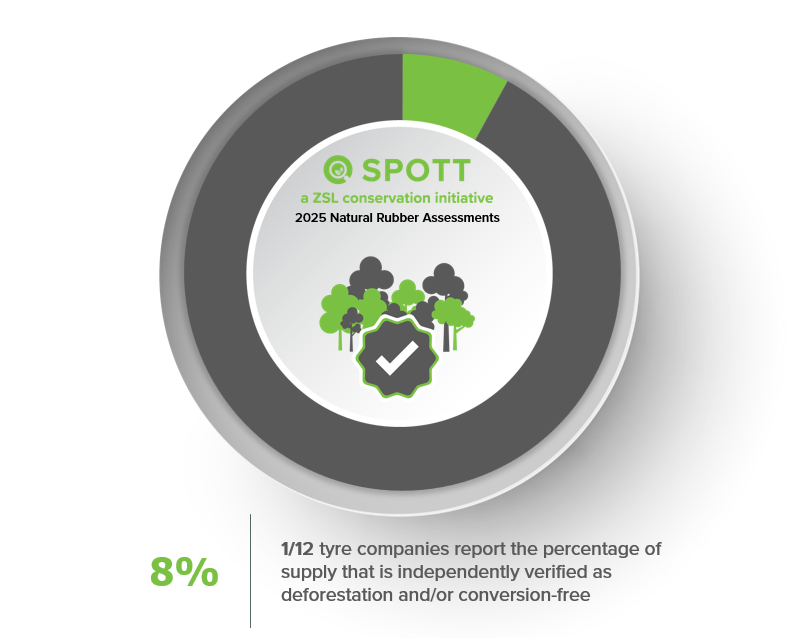
The team behind the assessment are calling for natural rubber companies to urgently publicly disclose supply chain information, monitor deforestation and verify sustainability claims to drive the industry towards a more resilient future – and encourage buyers, investors and policymakers to push for this change.
Sam Ginger, Sustainable Business Specialist at ZSL who led the report, said: “No sustainability target is achievable without traceability; if you can’t map it, you can’t manage it. We rely on tyres every day. From food lorries helping put meals on family dinner tables, to ambulances rushing people to life-saving medical attention, rubber is at the centre of modern life. But we also rely on the world’s forests for clean air to breathe and a healthy climate that supports life as we know it – yet the natural rubber sector is putting our planet’s ‘lungs’ at risk.”
In light of the global importance the world’s forests play in keeping the Earth’s climate stable and habitable, in 2021 world leaders from over 140 countries committed to halt and reverse deforestation by 2030, a set of commitments known as the Glasgow Leaders’ Declaration on Forests and Land Use.
Sam added: “If the industry continues this way, it risks derailing rapidly approaching global targets to halt deforestation – simultaneously makes itself vulnerable to collapse, while also fuelling climate instability worldwide. But if companies instead step up and take responsibility for protecting and restoring our natural air purifiers, they can speed up action towards creating a cleaner, healthier future for all.”
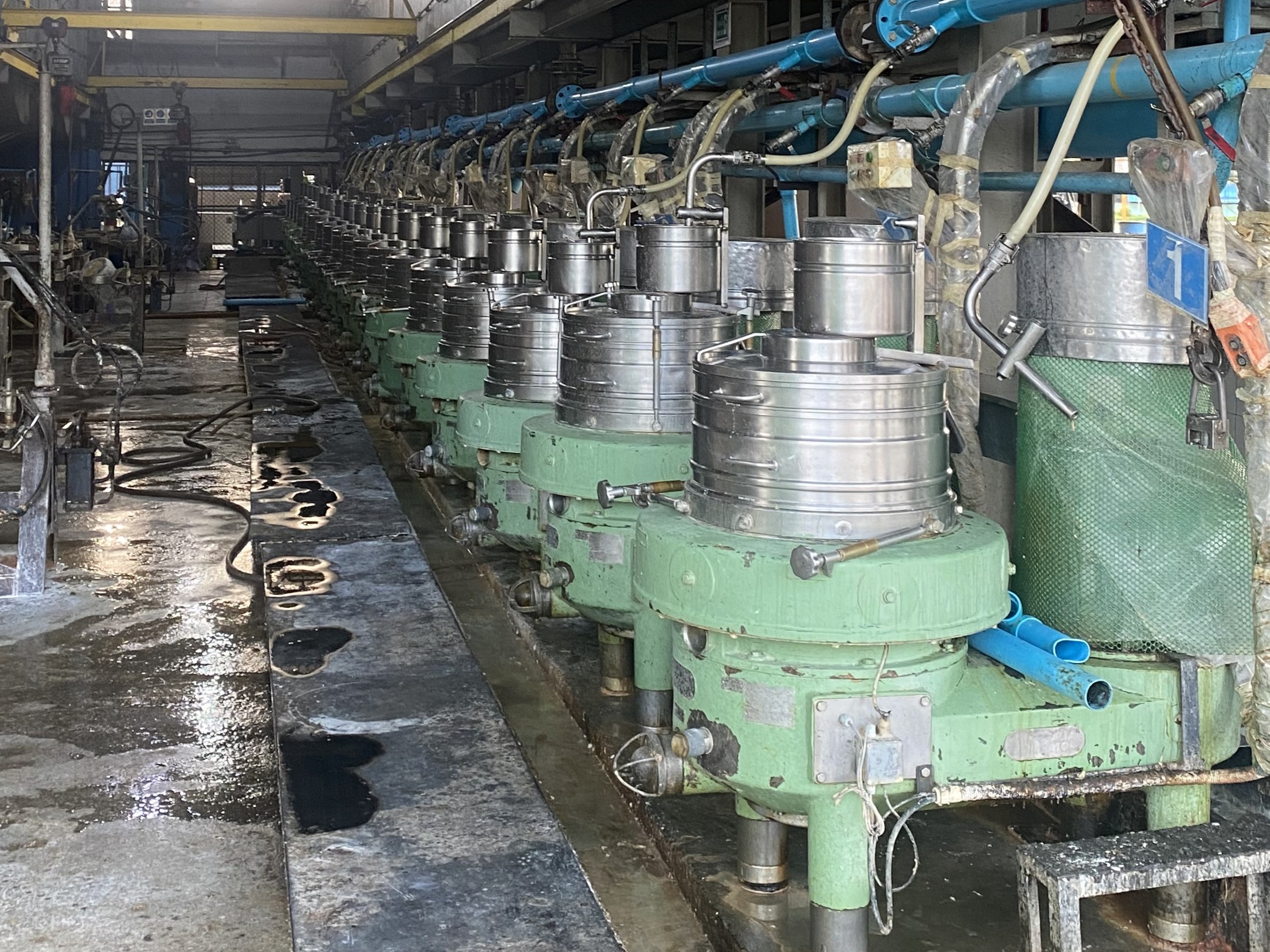
Industrial rubber processors play a key role in traceability – but few disclose where their rubber comes from or how it’s sourced
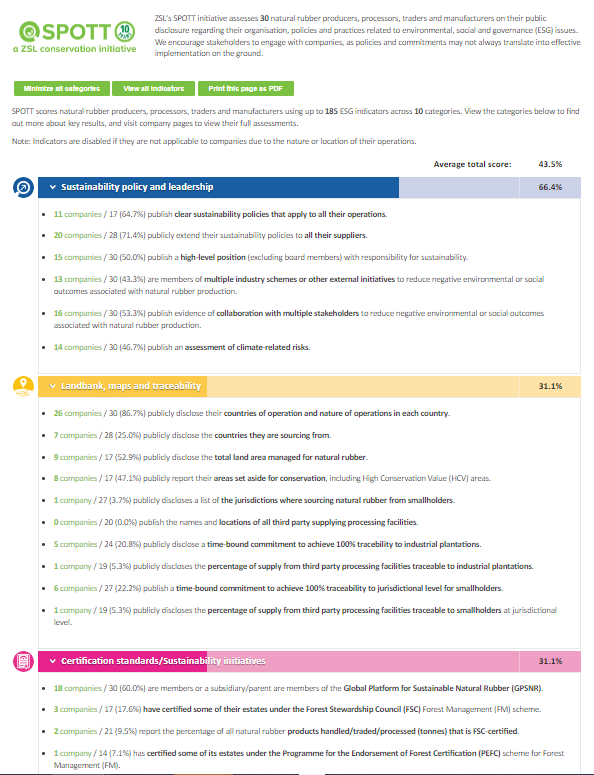
This issue extends throughout the natural rubber sector; only 4 out of 28 natural rubber companies (14%) publish evidence of monitoring deforestation in their supply chains, raising further concerns about the industry’s commitment to preventing forest loss and putting companies at risk of market exclusion due to the incoming EU Deforestation Regulation (EUDR). Despite approaching sustainability deadlines and increasing pressure from investors, many companies remain slow to act – putting their operating models at risk while simultaneously undermining global efforts to end deforestation for the benefit of people and wildlife worldwide.
The EUDR sets out that companies importing to the EU must know the origin of their rubber supply and ensure it is not harvested from land deforested after 2020. Failure to comply with the requirements set by the EUDR will put companies at serious risk of exclusion from the EU market, facing supply chain disruptions, regulatory penalties, and reputational damage.
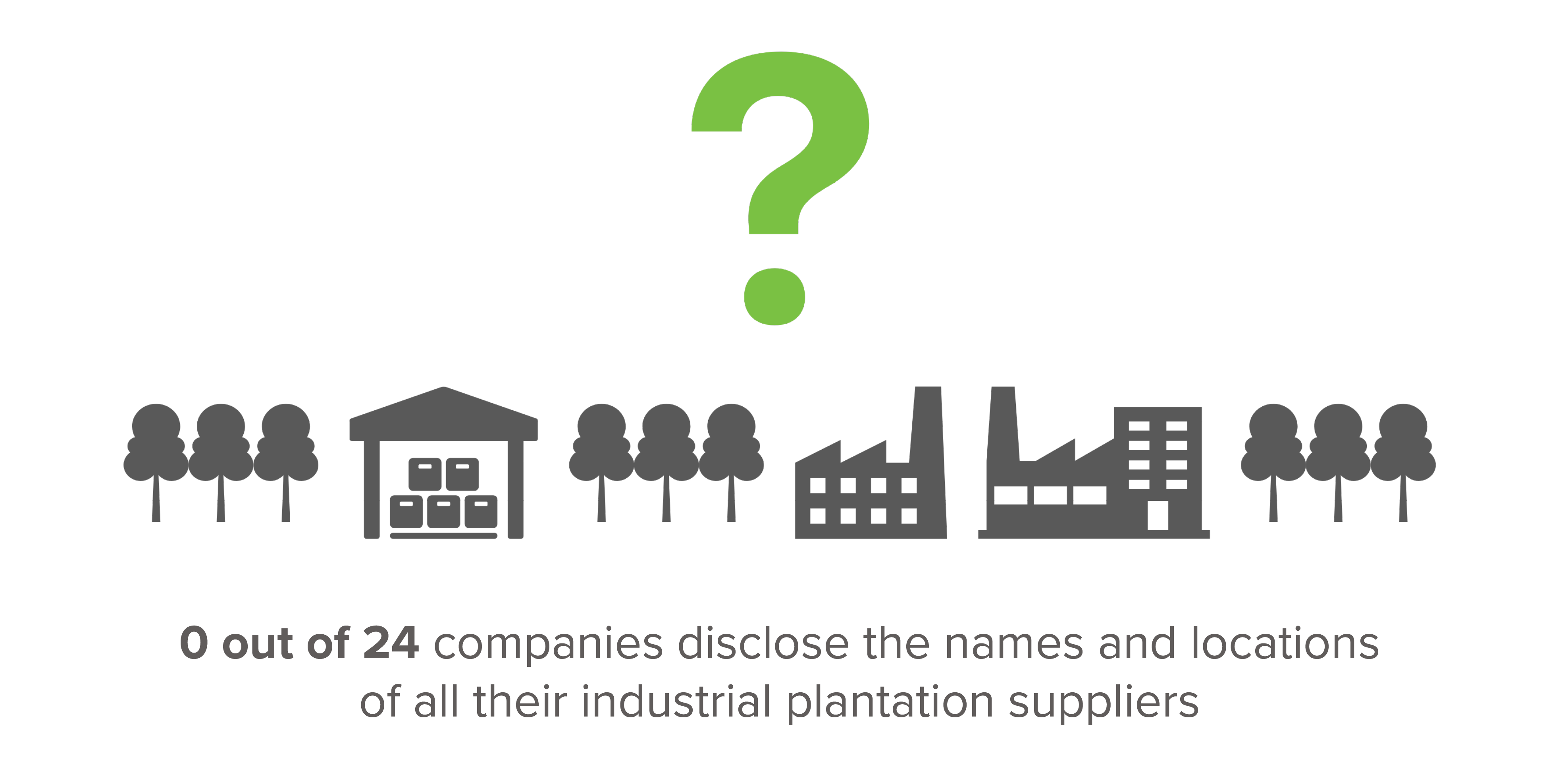
ZSL recommends companies to trace, map, monitor and verify their supply to build and sustain a credible, deforestation-free supply chain that both meets and expands upon EUDR requirements. Companies should start by tracing the most straightforward supply chains – processing factories buying directly from industrial plantations. Yet none of the 24 companies sourcing from these plantations disclose the full list of supplier locations. The absence of this data could indicate a lack of readiness for the industry to comply with EUDR requirements or a hesitation to expose supply chains to external scrutiny.
Sam explained that regulations aren’t the only way that a lack of action could cause companies to lose business: “Sustainability isn’t just about compliance; consumers, investors and buyers are demanding real action. Companies that fail to adapt won’t just lose access to key markets, they’ll lose business to competitors who take sustainability seriously.”
The urgency is heightened with the industry’s growing vulnerability to climate change, with the global loss of carbon-capturing trees being a major contributor to this crisis. Rising global temperatures are increasing the risk of severe weather events; 2024 saw extreme heat and devastating floods in China and Thailand, the world’s largest grower, leading to poor growing conditions, significantly reducing rubber yields and pushing prices to reach a 13-year high.
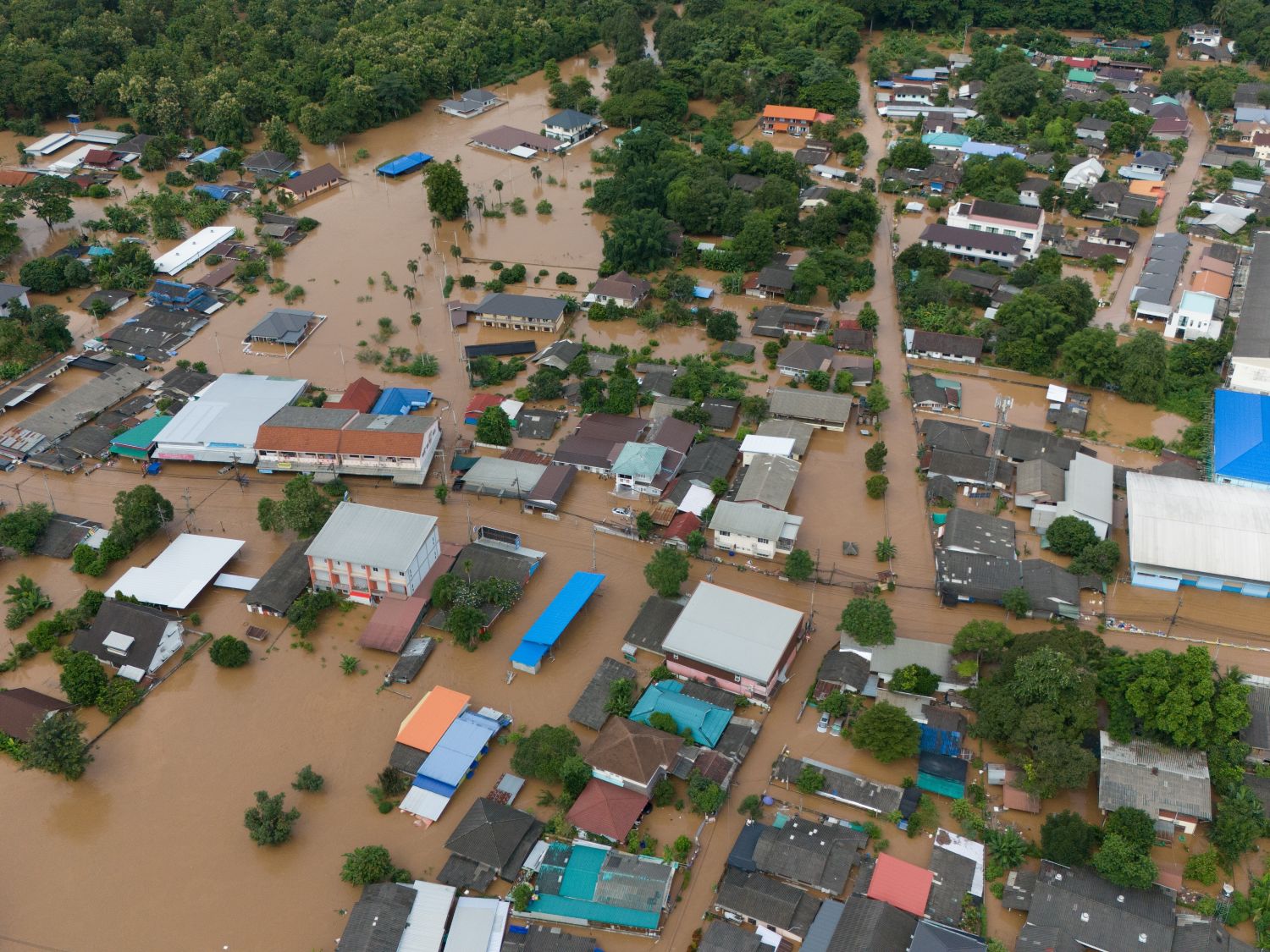
Flooding in parts of Thailand reflects the growing climate risks facing rubber supply chains
Sam said: “Despite these extreme weather events exposing the rubber industry’s vulnerabilities to climate impacts, most companies still lack basic deforestation monitoring – leaving them unable to prevent forest loss and continuing the industry’s contribution to the climate crisis. This risks creating a vicious cycle, where climate-driven disruptions reduce supply, driving up rubber prices and incentivising more deforestation. With little transparency or action, it’s uncertain if the industry is making any real progress toward protecting our forests.”
The report is published a week after the publication of the ZSL-endorsed 2030 Global Forest Vision: Priority Actions for 2025, which outlines the actions needed this year to keep the 2030 deforestation targets within reach, for the benefit of people and wildlife globally.
Buyers, investors, and policymakers are also key to driving change in the sector by calling on companies to disclose this information as part of ESG performance requirements. Beyond looking at public disclosure, the team behind the report emphasise that it is essential these key players regularly track suppliers’ progress, cross-reference data using tools such as SPOTT’s media monitor, identifying gaps between what has been reported and what is actually happening on the ground. Without a collective effort, the rubber industry will remain a blind spot in the global mission to build a world where people and nature can both thrive.
ZSL believes nature can recover, and that conservation is most effective when driven by science. We call for science to guide all global decisions on environment and biodiversity and build a healthier future for wildlife, people and the planet. Find out more and support ZSL’s world-leading, collaborative science and conservation work at www.zsl.org
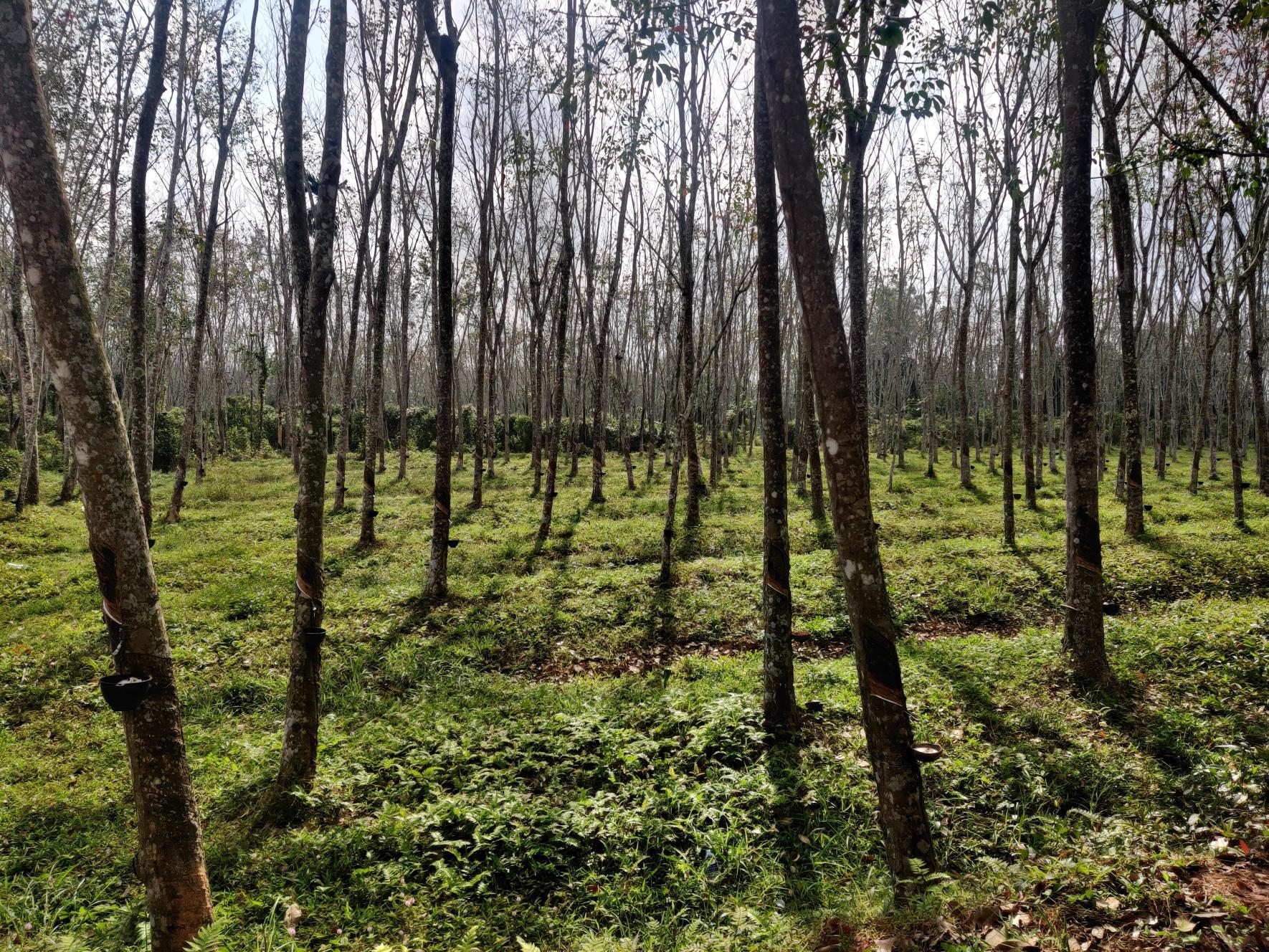
Rubber plantation in Thailand by Oliver Cupit
*) All findings in this report are based on publicly disclosed information available at the time of assessment. Data reflects company disclosures at the end of January 2025.