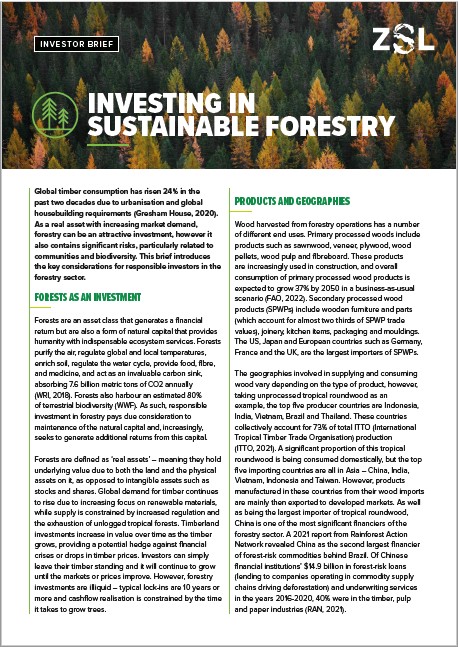
Gain insights on investing in forestry and responsible practices to support sustainability. Download ZSL’s investor brief on forestry.
ZSL’s latest investor brief on forestry provides an insightful overview of the opportunities and risks associated with investing in forestry. The report highlights the increasing global demand for timber and the potential benefits of investing in real assets such as forests. However, investing in forestry also comes with significant risks related to communities and biodiversity, which need to be carefully considered. The brief provides valuable insights into the key considerations for responsible investors in the forestry sector and the importance of maintaining natural capital while seeking additional returns.
The report also examines industry trends, including the rise in demand for engineered wood products for construction and the use of remote sensing and digital traceability systems. Carbon offsets are having a growing impact on forests as more companies and individuals look to carbon offset programs linked to forests to meet their climate goals. However, effective policies and oversight are necessary to ensure that the assets used for carbon offsets are fulfilling their intended purpose, with transparent and clear accounting practices that allow offset users and policymakers to easily verify the validity of offset claims.
Overall, ZSL’s investor brief on forestry provides valuable insights into the opportunities and risks associated with investing in this sector, as well as the importance of responsible investment practices to support sustainable development.
Thanks to Responsible Alpha for their valuable input in the creation of this brief.
Leading natural rubber companies – including Pirelli, Hankook and Continental – lack vital supply chain transparency and traceability, as concerns about competition and accountability obscure risks to tropical forests and threatened species.
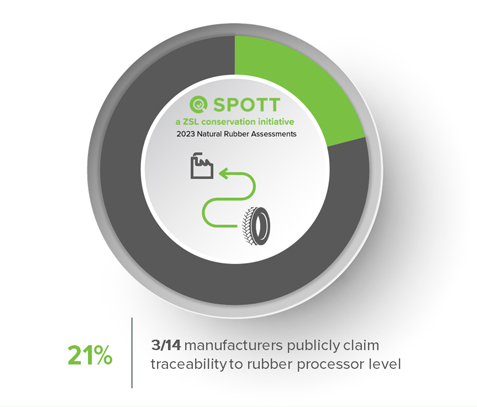
Launched on 28 March, the research data from ZSL’s latest SPOTT assessment indicates that 79% of the natural rubber manufacturers assessed are yet to publicly claim traceability to rubber processor level and just two companies, Michelin and Bridgestone, report they can trace some rubber back to the area where it was harvested. This void of traceability increases the risks of deforestation, biodiversity loss and rights abuses, as plantation expansion persists, and high-risk areas remain unknown.
ZSL Sustainable Business Specialist Sam Ginger, who led the assessment said: “Tyre manufacturers are the major players in the rubber supply chain, consuming over 70% of production. They often compete for access to the same rubber sources, and disclosing supplier locations could reveal competitive advantages, such as better pricing or more secure supply chains. However, this lack of transparency calls into question if enough is being done to protect nature.”
“The majority of rubber production occurs in Southeast Asia, home to species such as Endangered Asian elephants and Critically Endangered pangolins. Unsustainable practices threaten the future of these animals through habitat loss and increased human-wildlife conflict as animals stray onto plantations. Without supply chain traceability, companies cannot determine if they are supporting habitat destruction and biodiversity loss.”
Despite the complexity of the natural rubber supply chain – with most of the world’s rubber produced by six million smallholder farmers – pilot projects have shown that it is possible to trace rubber from processing facilities back to smallholder farms, enabling buyers to target interventions to improve farm sustainability.
Sam added: “Buyers, investors, and organisations such as Global Platform for Sustainable Natural Rubber (GPSNR) are all calling for greater supply chain transparency in the natural rubber industry. Companies that are transparent about their supply chains can build trust with stakeholders, demonstrate their commitment to sustainability, and differentiate themselves from competitors. If they can also trace supply back to origin, claims of action on sustainability commitments can be corroborated.”
ZSL’s assessment also illustrates that rubber companies might not be ready for the implementation of the upcoming EU Deforestation Regulation (EUDR) which aims to reduce deforestation and forest degradation associated with the production and trade of agricultural commodities, such as palm oil, soy, timber, beef, and rubber.
Under the EUDR, companies placing products on or exporting from the EU market must demonstrate that products are deforestation-free and legal, including rubber derivatives such as tyres, gloves, and apparel, while penalties for non-compliance with the EUDR could reach up to 4% of EU-wide turnover: ZSL’s research shows only 7% of companies publish evidence that they regularly monitor deforestation in supplier operations.

Penalties for non-compliance with the EUDR could reach up to 4% of EU-wide turnover
Joe Horrocks Taylor, environmental ESG analyst at Columbia Threadneedle Investments, which utilises the SPOTT assessment to rate rubber manufacturers, commented: “With agreement on the EUDR reached and natural rubber included in the final list of covered commodities, there is now an even stronger imperative for natural rubber manufacturers to disclose geo-location data for upstream production locations and to strengthen due diligence efforts.
“ZSL SPOTT’s Natural Rubber assessments are a crucial input which we use at Columbia Threadneedle Investments to be able to rate the quality of natural rubber manufacturers traceability, due diligence and environmental and social management. We engaged with seven natural rubber manufacturers and eight automotive companies in 2022, using ZSL SPOTT’s assessments and framework to focus on the most material issues. This is a programme which we will look to expand in 2023 by working with ZSL and our financial sector peers to accelerate the pace of change in the natural rubber industry.”
ZSL’s annual assessment continues to track industry progress over time; 69% of assessed companies now have public zero-deforestation policies, compared to 62% last year. Additionally, 33% now have time-bound commitments to reduce greenhouse gas emissions, an increase from 27% in 2022.
ZSL is firm on the need to create traceable and transparent natural rubber supply chains – part of their core mission to restore ecosystems and protect species. “Companies must publish lists of their suppliers – an action already commonplace for buyers of palm oil – and trace rubber to source so investments in sustainable cultivation practices can reach the farmers and environments in most need of assistance,” added Sam.
ZSL strongly urges all stakeholders in the natural rubber supply chain to put nature at the heart of their decision-making and to take proactive steps towards greater transparency and traceability to mitigate risks, build trust, and use the opportunities associated with sustainable rubber.
ZSL believes nature can recover, and that conservation is most effective when driven by science. We call for science to guide all global decisions on environment and biodiversity and build a healthier future for wildlife, people and the planet. Find out more and support ZSL’s world leading, collaborative science and conservation work at www.zsl.org
As major legislative strides are being taken to eliminate deforestation from commodity supply chains – with the recently adopted EU Deforestation Regulation leading the way – financial flows have so far been overlooked in regulatory attempts to address the drivers of international forest loss and degradation.
The EU Deforestation Regulation, adopted in December 2022, prohibits the import of a range of forest-risk commodities including palm oil, timber, and natural rubber, if they have resulted in deforestation. In the UK, the Environment Act 2021 similarly prohibits companies from importing forest-risk commodities linked with illegal deforestation. In both cases, companies must undertake due diligence to ensure these conditions are met. But to date, financial institutions have had voluntary frameworks rather than mandatory regulation to guide them in assessing and disclosing their deforestation risks and impacts.
This is despite the billions of pounds invested by asset managers, banks and pension funds (according to Global Witness and Make My Money Matter) in the UK which finance companies with a high risk of being linked to deforestation.
Realigning financial flows was one of the commitments of the Glasgow Leaders’ Declaration on Forests and Land Use at the UN climate change conference in November 2021. The newly adopted Kunching-Montreal Global Biodiversity Framework, the outcome of the negotiations at the UN biodiversity conference in December 2022, also highlights introducing financial regulations as a government target.
The Financial Services and Markets Bill, currently progressing through the House of Lords, offers an opportunity to help meet these commitments. The Bill redefines the UK’s financial regulation post-Brexit, and a proposed amendment, Amendment 199, would extend the due diligence requirements currently applied to large companies under the Environment Act 2021 to the financial sector.
The amendment has widespread cross-party support, meets the recommendations of the Global Resource Initiative taskforce expert group advising government, and is supported by environmental NGOs including Global Witness, WWF, Greenpeace, and Mighty Earth. ZSL stands with these organisations in our support for this amendment.
Mandatory regulation for financial institutions to undertake due diligence, and report on their risks and impacts on forests and biodiversity, is imperative if financial flows are to be realigned. Voluntary frameworks alone, such as the Taskforce for Nature-related Financial Disclosures (TNFD), are not sufficient in halting the financing of deforestation-risk activities.
The climate and biodiversity crises cannot be averted without halting deforestation. The agriculture, forestry and land use sector is responsible for driving 90% of tropical deforestation, and almost a quarter of greenhouse gas emissions. Deforestation must be eliminated from supply chains by 2025 if Paris Agreement climate goals are to be met. Deforestation is also associated with human rights abuses of local communities and Indigenous peoples which rely on forests for their livelihoods.
ZSL recognises that achieving deforestation-free finance presents challenges to financial institutions, and that sourcing companies are also struggling with these challenges. However, new company commitments, technologies and data are demonstrating it is feasible to greatly reduce deforestation risk in supply chains and in asset ownership, lending and investment activities.
ZSL wants to see UK-based investors actively engaged with high deforestation-risk companies to drive change, rather than disinvesting from these sectors. A well-worded amendment can effectively target those financial activities with direct deforestation risks, can incentivise investors to better assess and mitigate deforestation risk, and reward companies that are addressing deforestation risk with lower cost of capital.
Bringing financial institutions in line with major corporations in their due diligence requirements would help to achieve the UK’s net-zero goals, create a green economy, and secure a more sustainable, biodiverse future for the world’s tropical forests and peoples.
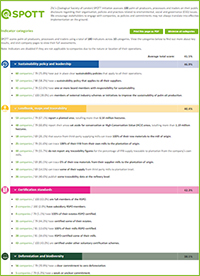
Indicator framework – your feedback welcome
We would like to invite you to provide feedback to us on the SPOTT indicator framework ahead of the 2024 assessments.
We have not made any other major changes this year but have edited some indicators either in response to previous feedback, to align with best practice reporting standards or to align better with our indicator frameworks for Palm Oil and Natural Rubber.
Please review the Indicator Framework and fill in the ‘Reviewer comments’ column with any feedback. We welcome feedback on any/all indicators, but have added notes to column Q to highlight the indicators where it would be particularly useful for us to have input. The deadline for feedback is Monday 26th February.
Please return the attached Indicator Framework document by Monday 26th February to samuel.ross@zsl.org
français
Cadre d’indicateurs – vos commentaires sont les bienvenus
Nous vous invitons à nous faire part de vos commentaires sur le cadre d’indicateurs SPOTT avant les évaluations de 2024.
Nous n’avons apporté aucun autre changement majeur cette année, mais avons modifié certains indicateurs soit en réponse aux commentaires précédents, soit pour nous aligner sur les normes de reporting des meilleures pratiques, soit pour mieux nous aligner sur nos cadres d’indicateurs pour l’huile de palme et le caoutchouc naturel.
Des modifications mineures ont été apportées à la formulation des critères de notation pour quelques indicateurs ; cependant, ceci est juste pour fournir des indications supplémentaires sur ce que nous recherchons et ne change pas la nature de la notation. Veuillez consulter le cadre des indicateurs et nous contacter pour tout commentaire. La date limite pour les commentaires est le lundi 26 février.
Veuillez nous retourner le document de la cadre des indicateurs ci-joint avant lundi 26 février pour samuel.ross@zsl.org.
Position Title: Sustainable Finance Specialist (Nature & Biodiversity)
Location: Flexible location within Southeast Asia
Contract Form: Full-time equivalent consultancy (230 days/year)
Department: Sustainable Business & Finance
Directorate: Conservation & Policy
Responsible to: Senior Sustainable Finance Specialist
Approved by: Head of Department
About ZSL
The Zoological Society of London (ZSL), a charity founded in 1826, is a world-renowned centre of excellence for conservation science and applied conservation. ZSL’s purpose is to inspire, inform and empower people to stop wild animals from going extinct. This is realised by carrying out field conservation and research in over 50 countries across the globe and through education and awareness-raising at our two zoos, ZSL London Zoo and ZSL Whipsnade Zoo, inspiring people to take conservation action.
About the Programme
Sitting within the Sustainable Business & Finance Department, the Sustainable Finance Programme aims to close the $1 trillion financing gap for nature, through working both on the demand side with investors to increase the financing for nature, and on the supply side to develop investible, nature positive projects and enterprises. The programme has five major focus areas:
- Mainstream responsible investment, incorporating biodiversity into decision-making
- Investment fund advisory, supporting the development, management and impact of sustainable and nature positive investment funds
- Partnering with business to finance biodiversity protection and restoration
- Building financially sustainable conservation projects and partners
- Developing a diverse range of nature-based solutions, including carbon projects
Key Purpose
The purpose of the position is to represent the Sustainable Finance Programme in Southeast Asia, provide technical inputs into the range of sustainable finance focus areas, in the development of new nature-based solutions projects and our finance sector advisory and engagement work.
Key Relationships
- Sustainable Business Advisory Manager
- Sustainable Finance Advisor
- Sustainable Business Specialists
- Communications Coordinator
- Conservation Planning Senior Manager
- Conservation Training & Learning Manager
- Conservation Network Manager
- Country programme staff in Southeast Asia
Main Duties & Key Responsibilities
Finance Sector Engagement
- Build and maintain relationships with financial institutions, including banks, asset managers, investors and family offices
- Provide training and ad-hoc support on biodiversity-related topics as well as the use of ZSL datasets such as SPOTT and the Living Planet Index
- Organise webinars and workshops aimed at the finance sector on priority sectors and themes
- Represent ZSL at conferences and events including taking on speaking roles
- Source impact investment for ZSL NBS projects and conservation enterprises
Technical Inputs
- Develop concepts, business models and impact models for NBS projects and enterprises in collaboration with regional teams
- Create dynamic financial models for NBS projects and enterprises including income statements, cashflow forecasts and capital requirements forecasts
- Work with carbon specialists, agronomists and social development specialists to develop quantified models for relevant project outputs
- Work with biodiversity experts to perform calculations of biodiversity metrics such as Biodiversity Net Gain (BNG) and Species Threat Abatement and Recovery (STAR)
- Undertake and contract out research on laws, regulation and policies related to NBS, company formation and management in local jurisdictions
- Desktop and interview-based research and due diligence on companies and projects to understand dependencies, risks and impacts on nature
- Provide review, analysis and advice to third parties on their policies and practices related to sustainable finance, including presentation production and delivery and report writing
Project Management
- Coordinate assigned projects in accordance with activity plans
- Manage project expenditure in accordance with project budgets
- Manage and undertake the drafting, execution and amendment of project and consulting contracts
- Ensure all assigned projects are compliant with ZSL policies and procedures and head contract terms and conditions, including data collection and reporting
- Undertake procurement activities for goods and services in line with ZSL policies and procedures
Fundraising
- Work with ZSL staff, consultants and partners to develop project concepts, theories of change, activity plans and budgets
- Draft grant applications, commercial proposals and capacity statements
Key Competencies
Required
- Strong finance expertise including the development of complex financial models, preferably including the preparation of financial statements for businesses
- Strong quantitative numerical expertise developing models related to the production of goods and services
- Analytical expertise undertaking desktop and interview research with a wide variety of organisations
- Ability to present research and due diligence findings in a coherent manner in presentations and reports
- Experience with project management, compliance, risk management, reporting, budget management and procurement
- Ability to engage effectively and build relationships with the finance sector
- Understanding of how to work effectively in cross-cultural environments with members of the Global South
- Demonstrated commitment to biodiversity conservation and restoration
Desirable
- Experience in the financial sector and/or private sector consulting
- Ability to develop quantitative socio-economic and environmental services models
- An understanding of legal forms of business as well as legal and regulatory compliance considerations for operating a business
- Experience working on nature-based solutions, nature positive enterprises and/or carbon projects
- Working proficiency in Bahasa Indonesia/Malay, Tagalog or Thai
Application Process
Applicants should send a copy of their CV and a cover letter providing evidence that they hold the key competencies on or before 22 January 2023. Applications should be submitted to spott@zsl.org.
Forest IQ is a new database that will provide financial institutions with market-leading data about corporate performance on deforestation, conversion of natural ecosystems and associated human rights abuses. This will enable financial institutions to identify risks and opportunities to help them to deliver deforestation free portfolios by 2025.
There is no pathway to a net zero world that does not address deforestation. Accounting for around 11% of global greenhouse gas emissions annually, tackling deforestation is fundamental to addressing the climate crisis.
Developed in partnership between Global Canopy, Neural Alpha, the Stockholm Environment Institute and The Zoological Society of London (ZSL), the database has been developed with a working group of 10 financial institutions, including banks and asset managers.
Forest IQ is a high quality source of data for nature, which enables investors to understand and act on their exposure to the companies driving tropical deforestation.
Investors are highly exposed to these systemic risks through their investments in companies in the key agricultural supply chains for cattle, soy, palm oil, timber, pulp and paper, and rubber, which are the main drivers of tropical deforestation.
Forest IQ brings together high quality datasets on those companies most exposed to these commodity supply chains driving deforestation throughout the value chain. This data is from Global Canopy’s Forest 500, ZSL’s SPOTT, FAO and certification schemes such as RSPO. It is combined to generate core metrics, aligned to the Accountability Framework’s common methodology, for each company on deforestation exposure, materiality and policy commitments and reported implementation. These core metrics allow an investor to compare companies both upstream and downstream, using a standard set of indicators.
With feedback from the working group, and as data improves on these issues more datasets will be added to strengthen the metrics and increase company coverage of the database.
Forest IQ’s comparable metrics enable investors to better understand their cross-portfolio deforestation exposure and act accordingly. It supports activities such as:
- Portfolio creation, screening and benchmarking
- Engagement and stewardship
- Due diligence
- Policy development and implementation
- Exclusion screening
There is growing recognition of the huge business risks from exposure to deforestation, conversion of natural ecosystems and associated human rights issues. This is reflected in the tightening regulatory environment, with deforestation regulations being developed in major importer markets such as the EU, UK, and the USA.
Investors need to act now to address these risks to their investments and position themselves to be able to comply with new legislation on deforestation. Forest IQ provides the high quality and comparable data and metrics needed to do this.
Forest IQ is being launched in its beta phase for testing by a group of financial institutions, and will be publicly launched in April 2023. If you are interested in learning more and getting updates on the development during the beta phase, please get in touch.
A new assessment led by ZSL has revealed that more than half of the world’s most significant palm oil companies are failing to publicly assess their suppliers on commitments to sustainability and zero-deforestation.
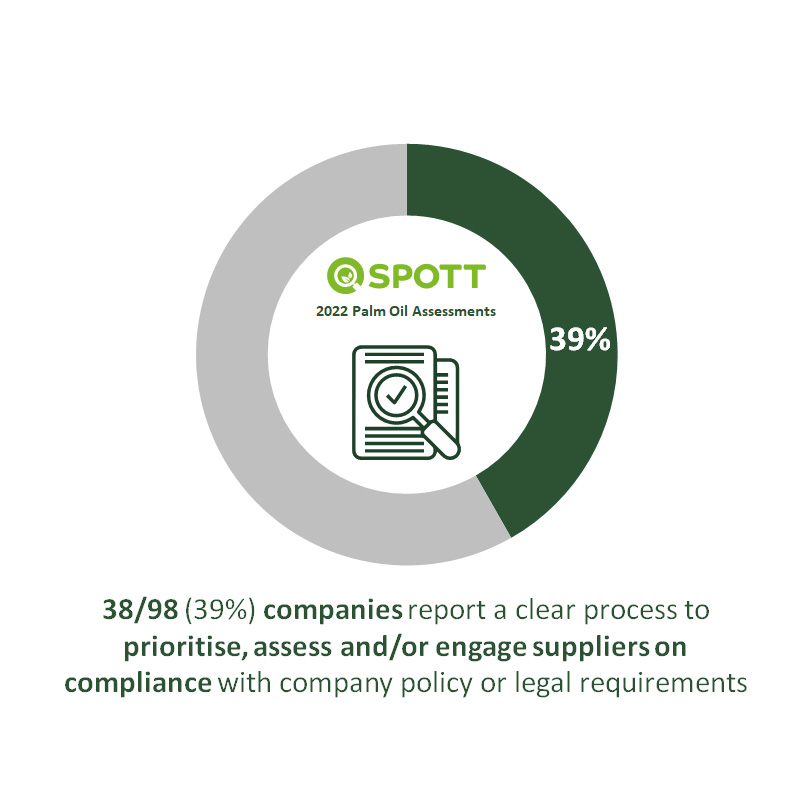
Published today (Wednesday 23 November) ZSL’s annual SPOTT ranking of palm oil producers, processors and traders found that while 39% of companies report a clear process to assess suppliers, the remaining 61% have limited or no public commitments for evaluating the risk of their suppliers being associated with habitat destruction and biodiversity loss – vital to ensuring a sustainable future for palm oil.
The SPOTT analysis also found only 58% of companies have a public zero-deforestation commitment that applies to all their suppliers, and just 12% have disclosed a time-bound action plan for suppliers to become compliant with sustainable palm oil sourcing commitments.
Eleanor Spencer, ZSL’s Sustainable Business Specialist for Asia says: “Palm oil can be a difficult topic due to unsustainable practices linked to the industry, such as deforestation, being some of the biggest contributors to habitat and biodiversity loss across the tropics – but it doesn’t have to be that way.
“As demand for palm oil continues to increase, ZSL is calling for the industry to provide stronger transparency on its assessment of and support for suppliers at all levels of the supply chain, to guarantee that they are complying with key social and environmental commitments – and legal requirements – needed to play their part in addressing the biodiversity and climate crises.
“Without transparent supplier evaluations and support, it’s impossible to know whether supply chains are avoiding environmentally damaging practices. Risk assessments are vital to improve sustainability in palm oil production and prevent greenwashing.”
The analysis reveals that only 11 companies report having a programme to support high-risk mills in ensuring compliance with their sourcing policies, presenting another opportunity for deforestation to enter the supply chain.
Eleanor added: “The current lack of support in these areas may become a bigger issue for some businesses when the EU Deforestation Regulation (EUDR) comes into force next year. This will require that palm oil and related products sold in the EU are produced without causing deforestation and human rights abuses. Without clear processes for assessing and engaging with suppliers on compliance, it is hard to see how some companies will meet these requirements.”
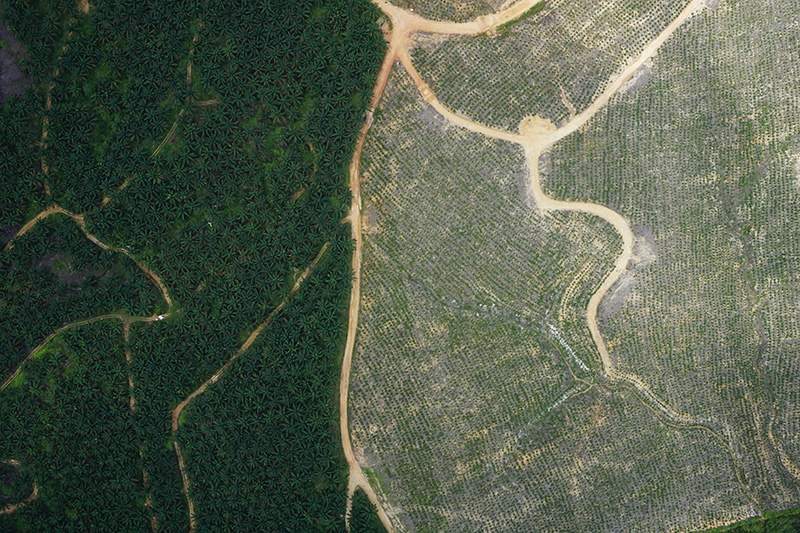
Deforestation for palm oil plantations in Indonesia | Credit: Shutterstock
Alongside threatening the vast array of species that live in the tropical forests of Asia, Africa, and Central and South America, deforestation and peatland draining has far-reaching repercussions through accelerating climate change by releasing millions of tonnes of carbon dioxide into the atmosphere.
Most of the palm oil produced globally is used for food and in consumer goods – such as lipsticks, biscuits and shampoos – but it is increasingly being used in biofuels for transport, electricity and heating.
Eleanor explained: “Palm oil is one of the most efficient vegetable oils to grow in terms of yield per hectare and so a complete rejection of its use could have unintended negative impacts – as a less efficient alternative may be adopted in its place. ZSL believes one of the fundamental steps to achieving sustainability is through increased transparency and commitments, which is why it’s concerning that so many companies continue to score so low in our assessment.”
The analysis found that four of the assessed companies, Royal Industries Indonesia PT, Sazean Holdings, Groupe Blattner Elwyn and Atama Plantation Sarl scored 0% across all assessment criteria.
Peter van der Werf, Executive Director Active Ownership at asset management company Robeco said: “We have a shared responsibility to halt deforestation. To address biodiversity loss, palm oil companies need to provide clear sustainability expectations towards their suppliers and empower them to move towards efficient and conversion-free planting and harvesting practices that allow for both food security and environmental resilience.”
Palm oil buyers, financiers and stakeholders can view SPOTT’s assessments and take advantage of a range of support tools to track transparency and benchmark progress at on the SPOTT dashboard.
ZSL will call on world leaders to put nature at the heart of all decision-making at the UN Biodiversity Conference this December – to better protect ecosystems, wildlife and the communities who rely on them. Find out more at www.zsl.org.
International conservation charity ZSL is calling for world leaders to put nature at the heart of all global decision making and to tackle the loss of biodiversity hand-in-hand with efforts to address the climate emergency. You can support ZSL global science and conservation work by visiting www.zsl.org to learn more about and donate to our work.
Tropical peatland areas are rich ecosystems crucial for biodiversity, and which deliver a range of vital regulating, provisioning, and supporting ecosystem services. The destruction and degradation of tropical peatland in Southeast Asia, Africa and Central and South America for oil palm cultivation has serious negative impacts on people and nature, as well as posing a business risk for companies in the supply chain and their financiers. This report provides an overview of ZSL’s 2021 SPOTT assessments of sustainability reporting by palm oil producers, processors and traders.
Peatland is found around the world, with tropical peatland underlying parts of the major rainforests of Southeast Asia, the Congo Basin, and the Amazon, as well as areas of Central America and the Caribbean. Peatland and wetlands are critical for preventing and mitigating the effects of climate change and preserving biodiversity.
A major threat to peatland is drainage for agriculture, including oil palm, and forestry, including industrial pulp plantations. Although tropical peat is not ideally suited for oil palm cultivation – due to its high water content and acidic pH – as demand for land has increased over the last few decades, and areas with optimal soil types have become increasingly scarce, pressure to convert these areas has continued to grow. It is predicted that the majority of smallholder oil palm expansion will happen on peat soils by 2030, as cultivators look for more marginal landscapes to convert in response to a growing demand for palm oil and other commodities.
Degradation and loss of peatland leads to declines in biodiversity, and puts threatened species at risk, with 45% of mammals and 33% of bird species in tropical peat swamp forests listed as threatened.
Given the critical environmental and social impacts associated with peat destruction, it is crucial that palm oil companies work to minimise the risks to peat on and around their plantations or those of their suppliers. The report provides a set of recommendations for palm oil producers, downstream buyers, banks and investors.
Against a backdrop of international food and fuel crises, implementing the commitments made last year at the COP26 climate change conference in Glasgow is more urgent, and challenging, than ever. Food systems and forests cut to the heart of the climate – and biodiversity – crises, with unsustainable food production and forestry driving deforestation, forest degradation and ecosystem conversion. With agriculture, forestry and other land uses contributing almost a quarter of global GHG emissions caused by humans, halting deforestation must be a core component of action on the climate crisis.
COP27, which will be held in Sharm El-Sheikh in November, will see the first Food Systems Pavilion, bringing together stakeholders from across food value chains to advance the agenda for tackling the climate crisis through transforming food systems to “create a net-zero, nature-positive world, while also ensuring social justice and food security.”
The COP26 Glasgow Climate Pact saw 90% of world GDP and around 90% of global emissions committed to net zero by ‘around mid-century’. Sustainable agriculture and forestry was in the spotlight, with over 90% of the world’s forests covered by commitments made through the Glasgow Leaders’ Declaration on Forests and Land Use to halt and reverse forest loss and land degradation by 2030, and this was accompanied by a pledge of USD 1.5 billion for the conservation of Congo Basin forests and peatland. COP26 also saw the launch of the Forest, Agriculture and Commodity Trade (FACT) Roadmap, with traceability and transparency one of the central themes of this government-to-government initiative.
The private sector is making strides to keep pace with these international agreements: for example, the UN’s Race to Zero Campaign represents over 5,000 businesses, alongside other key actors; over 2,200 companies representing USD 38 trillion have science-based emission reduction targets; and the Glasgow Financial Alliance for Net Zero, launched ahead of COP26, has over 500 member firms representing more than USD 130 trillion in assets under management and advice.
But despite the scope of national and corporate commitments to date, SPOTT data tell a different story, with individual company action lagging far behind business and finance sector pledges. SPOTT, an initiative of ZSL (Zoological Society of London), is a free online platform assessing commodity producers, processors and traders on their public disclosure regarding environmental, social and governance (ESG) issues. SPOTT-assessed companies collectively manage over 50 million hectares – an area the size of France – for the production of palm oil, timber and pulp, and natural rubber. But only 19% (41/219) have a time-bound commitment to reduce greenhouse gas (GHG) emissions intensity. Only 18% (36/202 companies) have public deforestation commitments that apply to their supply chains, and just 35% (67/193) have publicly revealed the names and locations of their mills and processing facilities – a fundamental step if commitments are to be verifiable.
Companies have a major role to play, and financial institutions have a great deal of leverage, in shaping and safeguarding a sustainable future through their purchasing and financing decisions. They must step up to support the advances made at COP27.
Here are three key areas where we hope to see progress in Egypt in November:
- Implementation COP26 commitments managed to keep 1.5C just within reach of being realised – it is now time for ambitious, decisive action to implement these commitments. Revised Nationally Determined Contributions – the first annual updates to address the insufficient ambition of NDCs submitted in 2021 – should include the contribution of halting gross deforestation in achieving net zero. Both national and corporate commitments should be strengthened by science-based targets, rapid implementation and regular reporting on progress.
- Finance for forests The broad issue of climate finance will be a major focus in November. The importance of financing climate action in all its forms is paramount to the success of keeping the 1.5C target alive. Alongside this, the role of equitable finance is also vital, with work needed on how large-scale funds for climate adaptation and mitigation can effectively reach recipients and aid those communities that are the most vulnerable to climate shocks in the short and long term. Within this, more targeted financing for forests is required, accompanied by concrete steps to ensure the money has an impact on the ground. USD 12 billion was committed at COP26 under the Global Forest Finance Pledge between 2021-25, with USD 1.5 billion of this pledged for the conservation of Congo Basin forests and peatlands. This was a welcome boost, but far from the estimated hundreds of billions needed annually to reverse biodiversity decline globally by 2030. Blended finance will be needed that mixes funds from public and private sectors, including concessional elements from the Green Climate Fund and multilateral development banks, alongside private philanthropy, venture funding or equity.
- Nature at the heart of decision making Just three weeks after delegates depart from COP27, global attention will turn to the Convention for Biological Diversity COP15 taking place in Montreal in December. However, biodiversity and climate should not be considered separately: they are closely interlinked, and it’s time to integrate policies that tackle both. Habitat loss – particularly forest loss and degradation – drastically reduces nature’s ability to store carbon, thus accelerating the climate crisis. As species struggle to keep up with the pace of change, their risk of extinction increases, leading to further ecosystem degradation. Nature-based solutions, such as habitat protection and restoration, can provide multiple benefits to people and wildlife. ZSL is calling for world leaders to put nature at the heart of all global decision making.
SPOTT assesses the most impactful producers, processors and manufacturers in the natural rubber sector on their public disclosure regarding the organisation, policies and practices related to environmental, social and governance (ESG) issues.
Assessed companies are reviewed on an annual basis to ensure that their inclusion continues to align with this aim and with the needs of our users. The review process includes desktop research as well as consultation with our Technical Advisory Groups.
One company to be removed from SPOTT in 2023
Royal Lestari Utama (RLU) will be removed as it was acquired by SPOTT-assessed Michelin in 2022. RLU’s reporting will be included in Michelin’s assessment from now on. All previous assessments of the two companies will remain accessible through the SPOTT website.
One company to be included on SPOTT in 2023
In line with our company selection process, we have identified Toyo Tires Corporation as an impactful company to assess based on nominations from stakeholders, its position as the largest tyre manufacturer not already assessed on SPOTT and its operations in priority landscapes. ZSL has attempted to notify the selected company regarding their forthcoming assessment on SPOTT.
SPOTT assessments of natural rubber companies will begin in November and companies will be sent draft assessments, giving them the opportunity to make further disclosures ahead of the final review and publication of assessments, in January. Final assessments will be published on SPOTT in March 2023.