A bank’s single client’s deforestation exposure can look manageable in isolation. A cocoa trader or furniture importer may each represent an acceptable level of risk when assessed individually.
Risks related to the EU Deforestation Regulation (EUDR) can affect multiple clients at the same time. When a significant share of a portfolio is concentrated in the same forest-risk commodity, or sources from the same high-risk geography, a change in market access, enforcement or compliance requirements can affect many clients at once. These patterns become visible only when the portfolio is viewed as a whole, through a deforestation lens.
The first and second blogs in this series looked outward from the bank to the client on why EUDR matters to financial institutions, and how a relationship manager can support a single client through it. This final piece takes a step back to look at the portfolio level, where risk, credit and sustainability teams need to understand where exposures are concentrated.
Seeing where deforestation risk sits
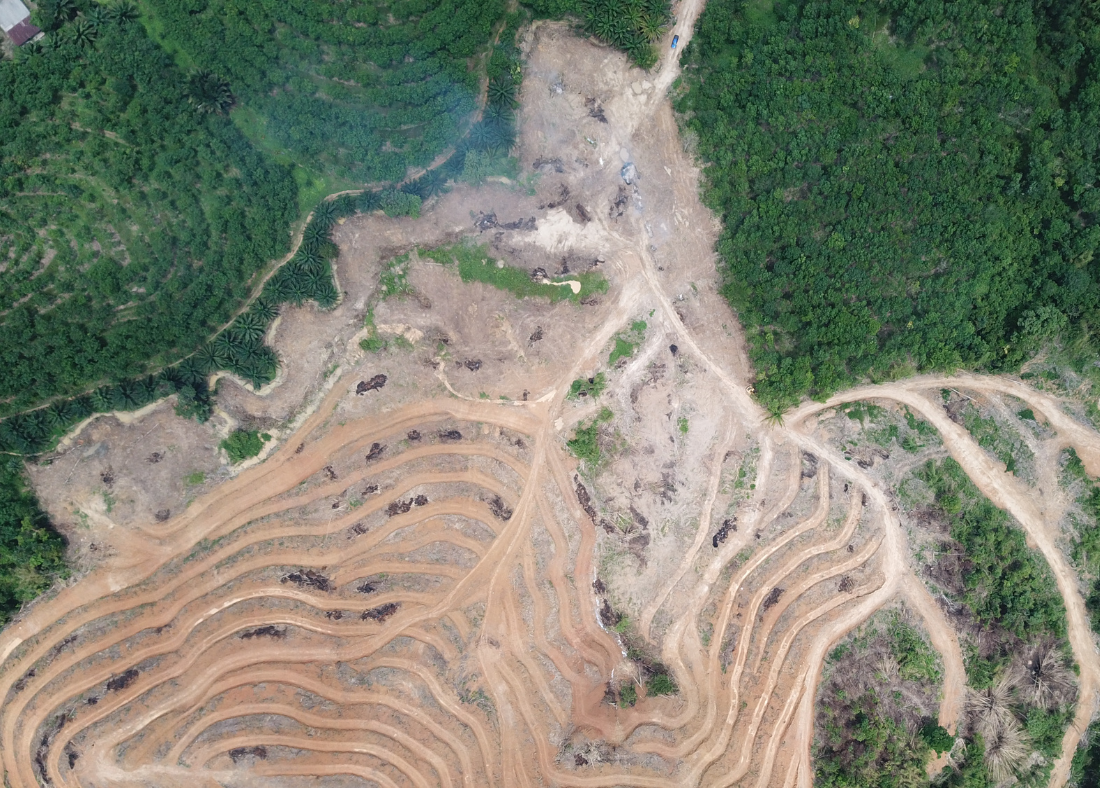
Whilst risk teams may already be mapping exposure to deforestation, it is also important to understand where that risk is concentrated. The seven commodities the EUDR covers, namely cattle, cocoa, coffee, oil palm, rubber, soy and wood, are associated with different levels and patterns of forest loss. Risk also varies by sourcing geography and by where a client sits in the supply chain.
These patterns differ considerably by commodity. In the World Resources Institute’s analysis of forest loss between 2001 and 2015, cattle pasture replaced more forest than the other six commodities studied combined, with much of that loss in South America. Forest replacement associated with oil palm was concentrated in Indonesia and Malaysia. Cocoa was associated with forest loss in several countries, including Côte d’Ivoire, Ghana and Indonesia. The relevant question for a bank is therefore which commodities its clients source, and from where, rather than how many clients have some exposure to an EUDR-covered commodity.
It is worth noting that this picture does not always match the EUDR’s own country classifications. The regulation sorts countries into low, standard and high-risk categories, drawing on forest data and other factors, including whether relevant sanctions and governance concerns make reliable due diligence difficult. Its current high-risk category therefore should not be read as a list of the countries with the greatest commodity-driven forest loss. A bank assessing its portfolio also needs to look at the commodity, sourcing region within countries, and suppliers to understand where deforestation risk is concentrated.
Risk also varies by where a client sits in the supply chain. Two clients can both count as exposed and still carry very different levels of risk. A small-scale producer operating close to the point of production and a downstream company several steps removed may both appear on an exposure map, but they sit in very different relationships to forest loss, traceability challenges and evidence requirements.
Looking at these differences across the portfolio can help banks identify where closer monitoring or engagement is most needed.

Making sure client level insight feeds into portfolio decisions
The client-level insights relationship managers gather in conversations are most valuable when they feed into wider risk management.
Insights from individual clients can inform periodic reviews and credit assessments, be shared with sustainability and compliance teams, and contribute to broader credit policy and sector strategy.
This creates a link between what a bank learns at client level and how it understands and manages deforestation risk across the portfolio.
Identifying opportunities for sustainable finance
A clearer view of deforestation risk can also help identify opportunities to support clients through sustainable finance.
Green finance products like sustainability-linked loans (SLLs), blended finance facilities, and sustainable trade finance and credit lines are all established ways for banks to support and enable deforestation-free supply chains. But the credibility of these products depends on the quality of the sustainability targets and evidence behind them.
The value of these products, for both the forest and the bank, comes from the strength of the targets and evidence behind them. What makes an instrument sound is a credible deforestation-free claim, traceable to plot level and backed by evidence of legal production, with progress that can be measured and verified.
For example, setting key performance indicators (KPIs) attached to a palm oil trader’s SLL could set a target to increase the proportion of its palm oil volumes that can be traced to the plots of land where the oil palm was grown, from a stated baseline to a specified percentage by a specified date. The target could state whether it covers all the trader’s palm oil volume or only a specified part of its business.
The trader could then provide evidence linking these volumes to those plots, and have progress independently verified. For volumes described as deforestation-free, that evidence would also need to support checks against the EUDR’s 31 December 2020 cut-off date and relevant production laws. By contrast, a vague target such as “improve supply-chain traceability” gives the lender no clear measure of success or way to verify progress.

Rubber plantation
Collaboration with peers, governments or NGOs on systemic risks
Some deforestation risk is too systemic for any single client to solve alone.
Landscape and jurisdictional initiatives, where companies, governments and communities work to reduce forest loss across an entire sourcing region, can lower risk for many clients sourcing from that area. Platforms such as the Global Platform for Sustainable Natural Rubber and the Consumer Goods Forum’s Forest Positive Coalition are examples of initiatives operating at this scale. For a bank, the portfolio-level opportunity is to identify clients sourcing from higher-risk regions, encourage their participation in credible collective initiatives, and consider where finance could support that work.
Banks are not directly regulated by the EUDR. However, the regulation is changing the conditions under which many of their clients trade, which can create financial, operational and reputational implications for lenders. ZSL’s ‘EUDR Guide for Relationship Managers’ sets out how understanding EUDR translates into practice, client by client. For banks beginning to build deforestation into how they engage, assess and support their clients, it is a practical place to start.
For the full picture now – how the regulation works, where exposure sits, and what to ask clients – read our ‘EUDR: A Guide for Relationship Managers’.
If you’d like to discuss what the EUDR means for your institution, or want practical advice on getting started, ZSL’s Sustainable Business & Finance team is here to help.